Best Foam Roller for Back Pain in 2026: Roll Away Tension and Reclaim Your Mobility
We've all experienced it: that dull ache in the lower back after a long drive, the sharp "pull" in the shoulders after a day at the computer, or the general stiffness that comes with intense exercise. Back pain is one of the most common physical complaints in the world, and while professional massage is great, you can't always get one when you need it. The best foam roller for back pain is like having a personal physical therapist in your living room. In 2026, the technology has evolved from simple "pool noodles" into vibrating percussive rollers, contoured spinal cradles, and heat-conductive materials.
Finding a foam roller that provides enough pressure to "knot-bust" your tight muscles but isn't so hard that it causes bruises is the key. We've evaluated dozens of models based on their density, surface texture, and ability to target specific spinal segments. This guide focuses on the top-performing rollers that offer the best relief for various types of back pain. Whether you're an athlete or a desk-worker, the right foam roller can transform your daily comfort and long-term spinal health.
Top 8 Best Foam Rollers for Back Pain (Detailed Reviews)
1. TriggerPoint GRID Foam Roller – Best Overall for Most People
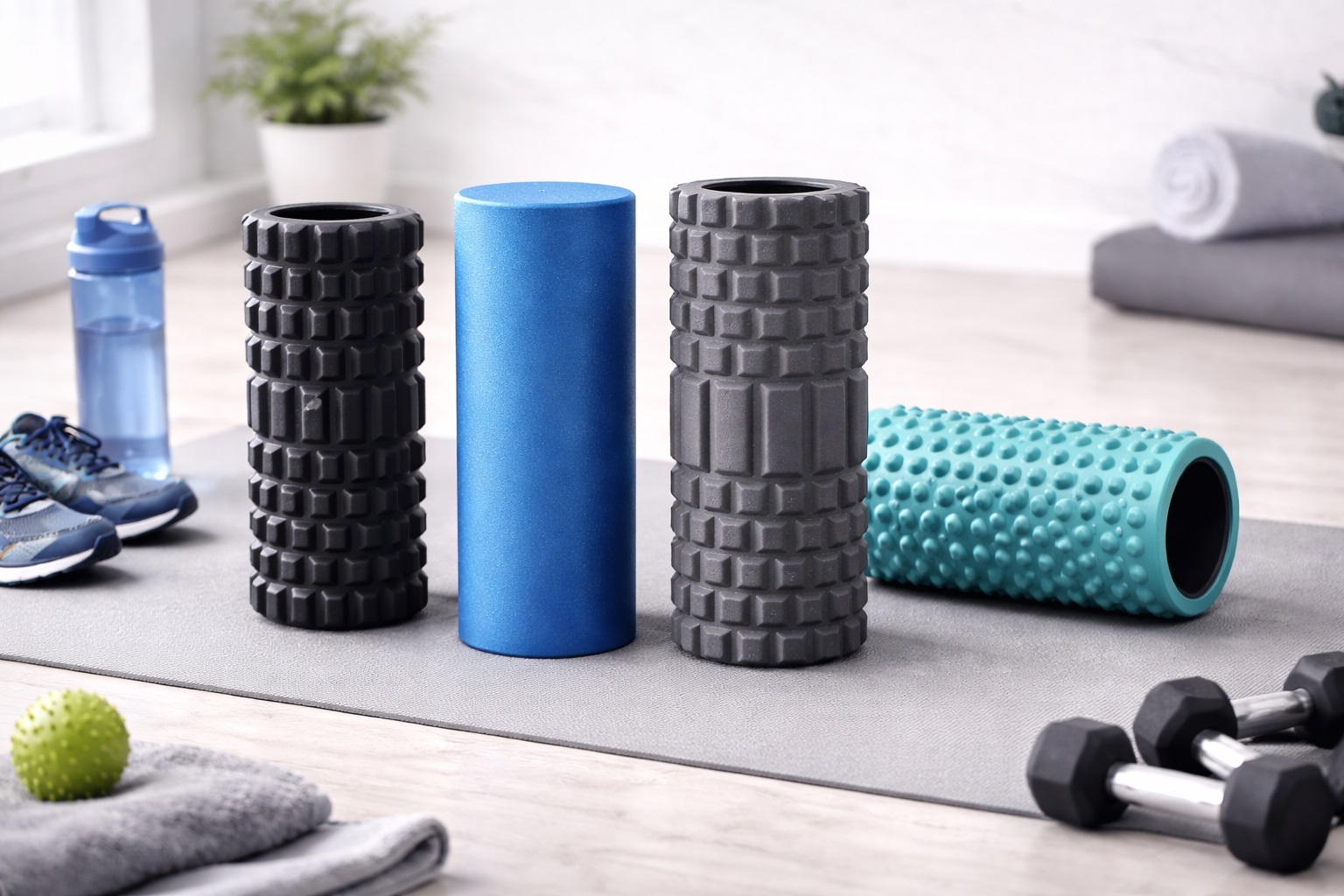
The TriggerPoint GRID is the most recognizable foam roller in the world for a reason. Its unique "distanced" surface features different textures designed to mimic a massage therapist's hand: high/firm sections for fingertips, tubular sections for fingers, and flat/low sections for the palm. This allows for a multi-dimensional tissue massage that is much more effective than a smooth roller. It also features a hollow core that makes it incredibly durable (it won't lose its shape over time) and easier to travel with.
- Pros: Multi-density zones, mimics manual massage, incredibly durable hollow core, great instructional guides.
- Cons: Can be a bit intense for absolute beginners, slightly more expensive than basic foam.
Who should buy this: Most people who want a versatile, high-quality roller for both general maintenance and targeted back pain relief.
Who should avoid this: Those with extreme skin sensitivity or those who prefer a completely smooth uniform pressure.
2. LuxFit High Density Foam Roller – Best Budget Pick
If you just want a solid, reliable, and smooth roller without any fancy "grid" patterns, the LuxFit is the winner. It is made of high-density EPP (Expanded Polypropylene) foam, which is firm enough to penetrate deep tissue but has a little bit of "give" that makes it comfortable for the spine. It is incredibly affordable and comes in various lengths, including the 36-inch model which is perfect for rolling the entire length of your spine.
- Pros: Very inexpensive, available in 36-inch length, incredibly durable EPP foam, smooth surface.
- Cons: No specialized textures, can be too hard for some users initially.
Who should buy this: Beginners and those who want a simple, long roller for full-body spinal alignment and chest opening.
Who should avoid this: People who need "fingertip-like" pressure for deep muscular knots.
3. Chirp Wheel+ (Set of 3) – Best for Spinal Specificity
The Chirp Wheel (seen on Shark Tank) is a specialized tool designed specifically for back pain. Unlike a wide foam roller, the Chirp Wheel is narrow and features a "Spinal Groove" down the center. This ensures the pressure is applied to the muscles *next* to your spine (the erector spinae) without putting direct pressure on your vertebrae. The set includes three sizes: 12-inch for deep stretching, 10-inch for strength and pressure, and 6-inch for "deep-tissue" neck and lower back work.
- Pros: Spinal groove protects the bones, incredible for "popping" and aligning the back, available in multiple intensities.
- Cons: Harder to use for legs or arms, can be unstable for those with poor core strength.
Who should buy this: People whose primary complaint is spinal stiffness or those who want a "cracking" sensation (alignment) in their back.
Who should avoid this: People looking for a "general purpose" body roller.
4. Hyperice Vyper 3 – Best Vibrating Foam Roller
In 2026, vibrating foam rollers have become the gold standard for athletes. The Vyper 3 combines high-density foam with three speeds of high-intensity vibration. The vibration "numbs" the pain receptors, allowing you to roll over sensitive areas much more deeply than you could with a static roller. It also significantly increases blood flow to the target area, accelerating healing and reducing inflammation.
- Pros: Vibration reduces pain during rolling, faster muscle activation, high-quality materials, TSA approved for travel.
- Cons: Very expensive, requires charging, can be too loud to use on an upper floor apartment late at night.
Who should buy this: Professional athletes and those with very chronic, "stuck" back pain that needs extra stimulation.
Who should avoid this: Casual rollers who don't want to spend $200 on recovery.
5. Rollga Contoured Foam Roller – Best for Ergonomics
Rollga features a unique "ribbed" and "wavy" shape that is designed to fit the contours of a human body perfectly. It has four distinct zones for the spine, shoulders, and legs. Like the Chirp Wheel, it has a center groove for the spine, but it’s a full-sized roller that you can also use for your calves and quads. It’s made of high-quality foam that is softer than the LuxFit but firmer than "soft" entry-level rollers.
- Pros: Contoured to fit the body, spinal protection, high-quality materials, comfortable across the shoulders.
- Cons: Unusual shape can take a few sessions to get used to, limited availability in some regions.
Who should buy this: People who find standard cylindrical rollers uncomfortable or "slippery."
Who should avoid this: Purists who like the simplicity of a straight cylinder.
6. OPTP PRO-ROLLER Soft – Best for Seniors and Beginners
If you have been told that foam rolling "hurts," you probably used a roller that was too hard. The OPTP PRO-ROLLER Soft is made of high-quality cross-linked EVA foam that feels much more like a cushion than a piece of wood. It provides a gentle, supportive massage that is perfect for those with osteoporosis, fibromyalgia, or general sensitivity. It’s "grippy" rather than "slippery," making it safer for those with balance concerns.
- Pros: Soft and comfortable, durable EVA foam won't sag, excellent for "gentle" yoga and PT, non-slip surface.
- Cons: Won't provide the "deep-tissue" release that heavy lifters need.
Who should buy this: Seniors, beginners, and people in recovery from acute injury who need gentle support.
Who should avoid this: Elite athletes with high muscle density.
7. Brazyn Morph Trek – Best for Travel
The biggest downside to foam rollers is their bulk. The Brazyn Morph is a full-sized "TriggerPoint" style roller that **folds completely flat**. You can slide it into a laptop sleeve or the side pocket of a backpack. When you're ready to roll, you just pull a tab and it clicks into a sturdy cylindrical shape. It can support over 350 lbs without collapsing. In 2026, this is the #1 choice for "Remote Workers" and frequent flyers.
- Pros: Flat-folding technology, very lightweight, full-sized surface when expanded, high-density foam.
- Cons: Mechanical parts (if sand/dirt gets in the hinges it can stick), more expensive than basic rollers.
Who should buy this: Commuters, digital nomads, and people who travel for work and struggle with "plane back."
Who should avoid this: People who only ever use their roller at home (where space isn't an issue).
8. RumbleRoller – Best for Deep Tissue "Knots"
The RumbleRoller looks like a piece of military equipment with its long, staggered "spikes" or knobs. These knobs are designed to penetrate deeply into the muscle tissue, much like the thumbs of a deep-tissue massager. When you roll over it, the knobs deflect and "knead" the muscle rather than just compressing it. It is the most "aggressive" roller on our list.
- Pros: Most effective at breaking up deep "trigger points," stimulates blood flow better than smooth rollers, antimicrobial material.
- Cons: Very painful for beginners, can be damaging if used directly on bone.
Who should buy this: Bodybuilders, high-level athletes, and people with very "thick" muscle tissue that standard rollers can't reach.
Who should avoid this: Most average users or anyone with a low pain tolerance.
Buying Guide: How to Choose Your Intensity
When picking a roller for back pain, the most important factor is the **Density**. If it's too soft, it won't work. If it's too hard, you won't use it. Here’s how to choose:
1. Density Levels
- Soft (White/Light Blue): Best for gentle yoga, stretching, and seniors.
- Medium (Multi-colored/GRID): Best for 80% of people. Enough to be effective, soft enough to use daily.
- High-Density (Black): Best for those with high muscle mass or very chronic, deep tension.
2. Length: 12-inch vs. 36-inch
A **12-inch (Standard)** roller is easy to store and great for individual muscles. A **36-inch (Long)** roller is essential if you want to lie on it vertically (with the roller under your entire spine). This "vertical" pose is the single best exercise for reverse "desk hunch" and opening your chest.
3. Surface Texture
**Smooth** rollers are better for consistent, even pressure. **Textured** (Grid/Spiked) rollers are better for "kneading" and targeting specific small knots. For back pain, a textured roller (like the TriggerPoint) is usually more effective at stimulating the complex muscles of the spine.
4. Material Durability
Look for **EVA or High-Density EPP** foam. Avoid cheap "open-cell" polyethylene foam (it looks like a pool noodle). Cheap foam will flatten out into an "oval" shape after only a few months of use.
FAQ: Rolling Your Back Safely
Can I roll my lower back (lumbar spine)?
**Be cautious!** Your lower back doesn't have the protection of a ribcage. When you roll your lower back, your muscles can "guard" or spasm to protect the spine. It is better to roll your glutes, hips, and upper back (thoracic) to relieve lower back pain indirectly. If you must roll the lower back, use a small, soft roller or a ball.
Is "cracking" my back on a roller safe?
Generally, if it happens naturally as you stretch, it is safe (it's just gas releasing from the joints). However, you should never "force" a crack or bounce on the roller to get one. If the cracking is accompanied by sharp pain, stop immediately.
How long should I roll?
More is not always better. Aim for **30 to 60 seconds** per muscle group. If you stay on one spot for too long, you can bruise the tissue or irritate the nerves. 5-10 minutes for your whole back is perfect.
Why do I feel "bruised" the next day?
This is common for beginners! Foam rolling is like a "workout" for your fascia. If you feel bruised, give yourself a day or two of rest, drink plenty of water, and use a softer roller next time. Your tissue will get tougher and less sensitive over time.
Should I roll before or after bed?
Rolling **before bed** is excellent for relaxing the nervous system and resetting your posture from the day. Rolling **in the morning** is better for "waking up" your muscles and preparing for movement. Both are beneficial!
Final Verdict: The Winner for Your Recovery
- The Best All-Rounder: The TriggerPoint GRID is the most balanced and effective tool.
- The Spinal Specialist: The Chirp Wheel+ is the winner for specific spinal alignment.
- The Budget Hero: The LuxFit 36-inch provides full-back support for a very low price.
Your back carries the weight of your entire life. By taking 10 minutes a day to "roll out" the tension, you are investing in your future mobility and comfort. Don't live with the ache—choose your roller and reclaim your back today!