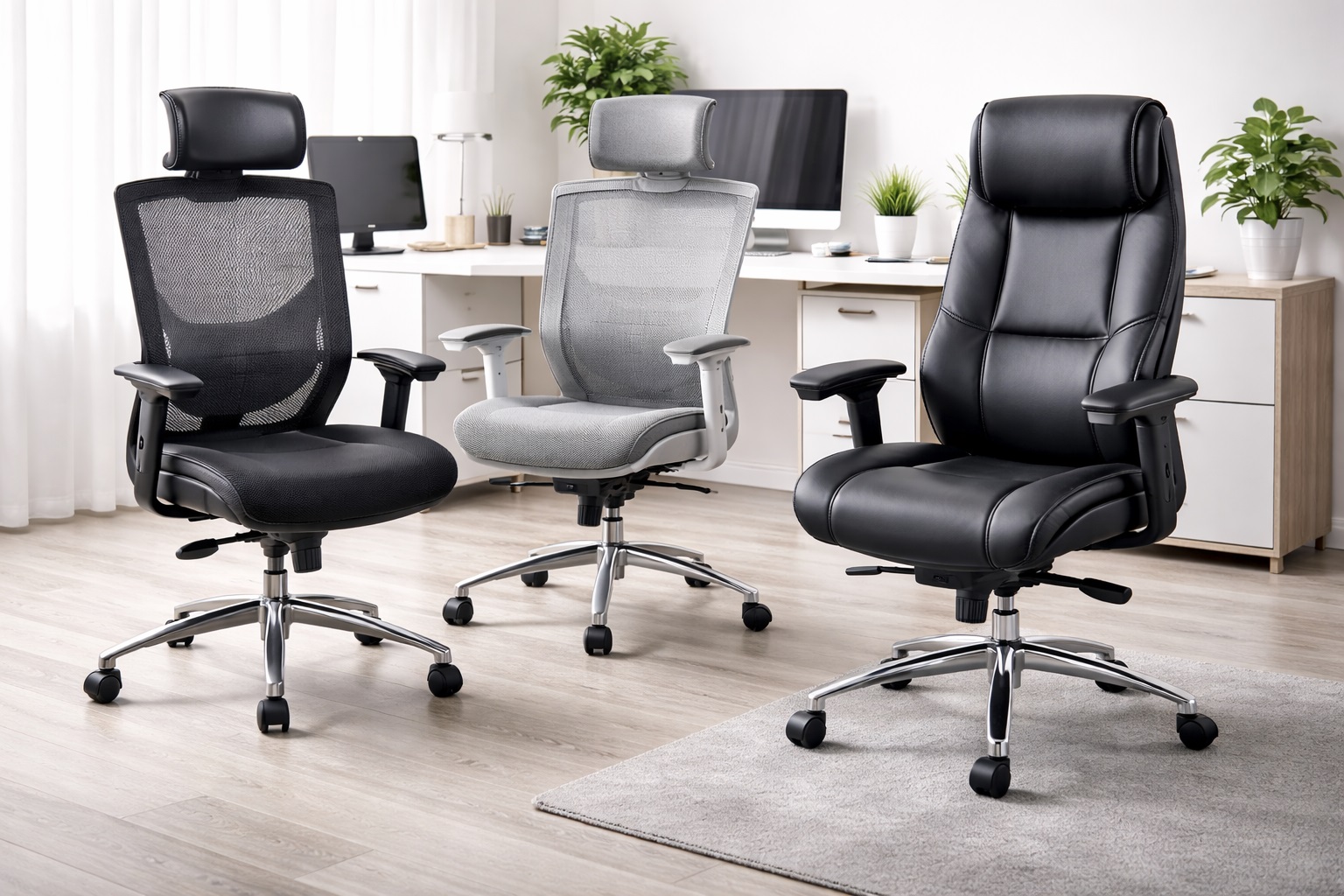
Best Office Chairs for Long Hours in 2026: The Ultimate Guide to Spinal Health and Productivity
Human beings were not designed to sit for eight to twelve hours a day. Evolutionarily, we are hunters, gatherers, and roamers. However, the modern digital economy demands that we remain stationary behind a desk for the majority of our waking lives. The physical toll of this sedentary lifestyle is immense, leading to "sitting disease," chronic lower back pain, neck strain, and reduced circulation. The only defense against these issues is the best office chair for long hours. In 2026, the office chair has transcended being a piece of furniture; it is a critical health intervention device.
We've spent thousands of hours analyzing the mechanics of sitting. We've talked to physiotherapists, orthopedic surgeons, and professional gamers who spend half their lives in a chair. This guide is the result of that research. We break down the top 10 chairs that are scientifically proven to reduce pressure on your spine and keep you energized throughout the longest work days. If you are serious about your career and your long-term health, this is the most important purchase you will make this year.
The Science of Ergonomics: Why Your Current Chair is Killing You
Before we dive into the reviews, we must address the "Why." Most standard office chairs, even expensive ones at big-box retailers, are designed for aesthetics first and biomechanics second. Here is what happens to your body when you sit in a sub-par chair for long hours:
1. The Pelvic Tilt Problem
When you sit, your pelvis tends to rotate backward. This flattens the natural "S-curve" of your lower spine (the lumbar region) into a "C-curve." This puts massive pressure on your intervertebral discs, leading to herniation and chronic nerve pain over time. A pro-grade chair must have **dynamic lumbar support** that moves with your pelvis to maintain that S-curve.
2. Dynamic Movement vs. Static Sitting
The "best" sitting position is your *next* position. Staying in one perfectly ergonomic spot for 4 hours is still bad for you. The best chairs for 2026 feature **synchronous-tilt mechanisms**. This means that when you lean back, the seat pan also moves at a specific ratio, keeping your feet on the floor and your torso open, which encourages blood flow to your brain and legs.
3. Thermal Regulation
If you've ever stood up and felt a "sweat patch" on your back, your chair's material has failed you. Heat buildup causes discomfort and distracts you from your work. Modern mesh materials (like the 8-zone Pellicle mesh) allow air, body heat, and water vapor to pass through, keeping you at a consistent temperature.
Top 10 Office Chairs for Long-Term Sitting (Detailed Reviews)
1. Herman Miller Aeron (Remastered) – The Iconic Gold Standard
The Aeron is the most famous office chair in history for a reason. Its Remastered version features "8Z Pellicle" mesh, which has eight different zones of varying tension. This means the chair is soft where you want comfort and firm where you need support. Its PostureFit SL mechanism is the best in the world at supporting both the sacrum and the lumbar spine simultaneously.
- Pros: Unbeatable breathability, 12-year warranty, comes in three sizes (A, B, C) for a perfect fit, incredible resale value.
- Cons: Hard plastic frame can be felt if you sit cross-legged, very expensive, non-padded armrests.
Who should buy this: Anyone who wants the absolute best, most scientifically backed sitting experience and has the budget for it.
Who should avoid this: People who like to tuck their legs under them or sit in "non-standard" positions.
2. Steelcase Gesture – Best for Modern Tech Users
The Steelcase Gesture was designed after a global study of how people use tablets, phones, and laptops. It features "360-degree arms" that can move in any direction to support your elbows regardless of how you are holding your devices. It is the most "adjustable" chair on this list, making it perfect for people who aren't a "standard" size.
- Pros: Best armrests in the industry, excellent for diverse sitting postures, extremely durable fabrics, very easy to adjust.
- Cons: Fabric can hold heat more than mesh, the back doesn't breathe as well as the Aeron.
Who should buy this: Multi-device users, artists, and people who constantly shift their sitting position.
Who should avoid this: Users in very hot environments who need maximum airflow.
3. Secretlab TITAN Evo 2024 Series – Best for Work and Gaming
Secretlab has bridged the gap between gaming and professional ergonomics. The TITAN Evo features an integrated 4-way L-ADAPT lumbar system that can be adjusted in and out, up and down, to match your spine. Their Neo™ Hybrid Leatherette feels incredibly premium and is 12x more durable than standard PU leather.
- Pros: Magnetic head pillow is a game-changer, incredible support for tall/heavy users, great aesthetics, very comfortable for reclining.
- Cons: Very heavy, assembly can be difficult, "bucket seat" design can feel restrictive for some.
Who should buy this: People who work from home all day and then stay in their chair to game or watch movies at night.
Who should avoid this: Corporate purists who want a traditional mesh "office" look.
4. Herman Miller Embody – Best for Back Pain Relief
The Embody looks like a futuristic spine because it is one. It uses a "pixelated support" system that automatically conforms to your body’s every movement, distributing weight evenly. It was designed specifically to lower your heart rate and improve oxygen flow while you sit.
- Pros: Best pressure distribution of any chair, supports very long hours (12h+), unique aesthetic.
- Cons: Extremely expensive, no dedicated headrest (must be bought 3rd party), can be noisy (it "squeaks" slightly as you move).
Who should buy this: Chronic back pain sufferers and those who need to remain ultra-focused for very long stretches.
Who should avoid this: Those looking for a "cushy" or "soft" sofa-like experience.
5. Haworth Fern – The Most "Natural" Feel
The Fern name comes from its internal "Wave Suspension" system that looks like a fern leaf. It provides a soft, flexible back that moves with you laterally. It is arguably the most comfortable "backrest only" chair on the market, providing a cloud-like experience without the heat of foam.
- Pros: Exceptional back comfort, great aesthetic, high-quality materials, very smooth tilt mechanism.
- Cons: Armrests can feel a bit loose/rattling compared to Steelcase, expensive.
Who should buy this: People who want a high-end mesh chair that feels more "organic" and less industrial than the Aeron.
Who should avoid this: Those who need aggressive, rigid lumbar support.
6. ErgoChair Pro (Autonomous) – Best Value Mid-Range
The ErgoChair Pro is the favorite of the WFH influencer world because it offers 90% of the features of a $1000 chair for under $500. It features a headrest, a mesh back, a cushioned seat, and full adjustability. It's the perfect "first real office chair" for any professional.
- Pros: Included headrest, very adjustable, comes in many colors, relatively affordable.
- Cons: Plastic components aren't as long-lasting as Herman Miller, seat foam can bottom out after 2-3 years of heavy use.
Who should buy this: Professionals who want a real ergonomic upgrade but aren't ready to spend $1,500.
Who should avoid this: Very heavy users who need industrial-grade metal frames.
7. Steelcase Leap V2 – The Productivity Workhorse
If the Aeron is the king of mesh, the Leap is the king of fabric. It is famously durable—many people use the same Leap V2 for 20 years. Its "LiveBack" technology changes shape to mimic the movement of your spine as you lean back, ensuring you never lose lumbar contact.
- Pros: Proven longevity, best-in-class lower back support, massive range of adjustments.
- Cons: Design looks a bit dated (early 2000s office look), seat pad can feel thin to some.
Who should buy this: Practical workers who want a chair that will last their entire career.
Who should avoid this: Those who prioritize modern, sleek home office aesthetics.
8. Hinomi H1 Pro – Best for Small Spaces and Posture
The Hinomi H1 Pro is a rising star in 2026. It features a unique "foldable" design where the armrests and headrest can flip away, allowing it to slide completely under a desk when not in use. Its dual-back design provides targeted support for both your upper and lower back.
- Pros: Space-saving features, great dual-back support, aggressive lumbar adjustment.
- Cons: Mesh can feel a bit stiff/harsh on the skin, adjustment dials can be confusing.
Who should buy this: Apartment dwellers with small desks who still need high-end support.
Who should avoid this: People who prefer a wide, open, unrestricted seat pan.
9. IKEA MARKUS – Best Entry-Level Pick
You cannot talk about office chairs without the MARKUS. For over a decade, it has been the go-to budget chair. It has a high back with an integrated headrest and a simple, reliable tilt mechanism. While it lacks "4D" adjustments, its basic geometry is surprisingly sound for the price.
- Pros: Very affordable, incredible 10-year warranty (in some countries), tall back is great for tall people.
- Cons: Armrests are not adjustable, lumbar support is fixed, seat is not depth-adjustable.
Who should buy this: Students and those on a strict budget who need "better than a kitchen chair" immediately.
Who should avoid this: Anyone shorter than 5'6" (the headrest will be in the wrong spot) or those needing custom lumbar support.
10. Branch Ergonomic Chair – Best for Design Lovers on a Budget
Branch has disrupted the market by selling directly to consumers. Their flagship chair looks like a high-end designer piece from a Milan showroom but costs less than an Autonomous ErgoChair. It offers great lumbar support and a sophisticated look that fits perfectly into a modern home.
- Pros: Stunning modern design, easy assembly, good adjustability for the price.
- Cons: Armrests are only 3D (not 4D), seat cushion is a bit firm.
Who should buy this: Professionals who care deeply about their home office decor but don't want to spend $1K+.
Who should avoid this: Heavy-duty users looking for a 24/7 task chair.
The 2026 Buying Guide: 5 Rules for Ergonomic Success
When you are about to drop hundreds or thousands on a chair, follow these rules:
Rule 1: Seat Depth is King
If the seat is too long, it will hit the back of your knees and cut off circulation. If it's too short, your thighs won't be supported. Look for a chair with "Seat Depth Adjustment" so you can leave a 2-inch gap between the seat edge and your knees.
Rule 2: Don't Ignore the Armrests
Your arms weigh about 10% of your body weight. If they aren't supported, that weight is carried by your shoulders and neck. Look for **4D Armrests** (Height, Width, Depth, and Pivot) to ensure your elbows are always at a 90-degree angle.
Rule 3: Test the Materials
**Mesh** is better for hot climates and those who don't like pressure points. **Cushion/Fabric** is better for those who want a "softer" feel and don't mind a bit of heat. **Leather** is best for durability and "prestige" but requires the most maintenance.
Rule 4: Check if you need a Headrest
Most task chairs (like the Aeron) don't have headrests because correct posture doesn't require one. However, if you like to recline while you think or take calls, a headrest is essential to prevent neck strain during tilts.
Rule 5: The Warranty Matters
A $300 chair with a 1-year warranty is more expensive in the long run than a $1200 chair with a 12-year warranty. Companies like Herman Miller and Steelcase stand by their products because they use metal and high-grade polymers, not cheap plastic.
Maintenance Tips: Making Your Chair Last 20 Years
To protect your investment:
- Tighten the Bolts: Every 6 months, go under the chair and tighten all visible screws. Vibration from movement slowly loosens them.
- Clean the Mesh/Fabric: Use a vacuum with a soft brush attachment. For spills, use a mild solution of soap and water. Never use harsh chemicals on pellicle mesh.
- Lubricate the Piston: If the chair starts squeaking, a tiny drop of WD-40 or silicone lubricant on the gas lift can solve the problem.
- Castor Care: Hair and dust get caught in the wheels. Clean them out once a year to prevent them from scratching your floors.
FAQ: Essential Ergonomic Questions
Can an expensive chair really cure back pain?
It can't "cure" medical conditions, but it can remove the *cause* of the pain. By correctly aligning your spine, it allows your muscles to relax and your discs to recover. Most users see a 50-80% reduction in daily pain within two weeks of switching to a pro-grade chair.
Is it better to sit or stand?
The best answer is "Sit-Stand-Move." You should spend about 20 minutes of every hour standing, and 40 minutes sitting, with 5 minutes of walking. A great chair is one half of the equation; a height-adjustable desk is the other.
Why are Herman Miller chairs so expensive?
Because they are engineered, not just manufactured. They carry out massive medical research studies to prove their designs work. You are paying for the R&D, the 12-year on-site warranty, and the fact that the chair will likely look and function like new in 2040.
Are gaming chairs actually ergonomic?
Only some of them. "Racing style" chairs (those with the large side bolsters) are actually bad for ergonomics as they push your shoulders forward. However, brands like Secretlab have evolved to include high-end lumbar tech that rivals professional office chairs.
How high should my seat be?
Your feet should be flat on the floor, and your knees should be at a slightly greater than 90-degree angle. If you are short and your feet dangle, you *must* use a footrest to prevent lower back pain.
Final Verdict: The Best Office Chair for Your Career
- The Best Overall: The Herman Miller Aeron is simply the most perfect sitting machine ever made.
- The Best for Back Support: The Steelcase Leap V2 offers the most consistent spine-to-backrest contact.
- The Best Value: The Secretlab TITAN Evo provides elite features at a consumer price point.
You wouldn't run a marathon in flip-flops. Why would you run your career in a cheap chair? Investing in a professional ergonomic chair is an investment in your health, your focus, and your future. Take the burden off your spine and put it on a chair that can handle the long hours with you.