Best Portable Monitor for Travel in 2026: Extend Your Studio Anywhere
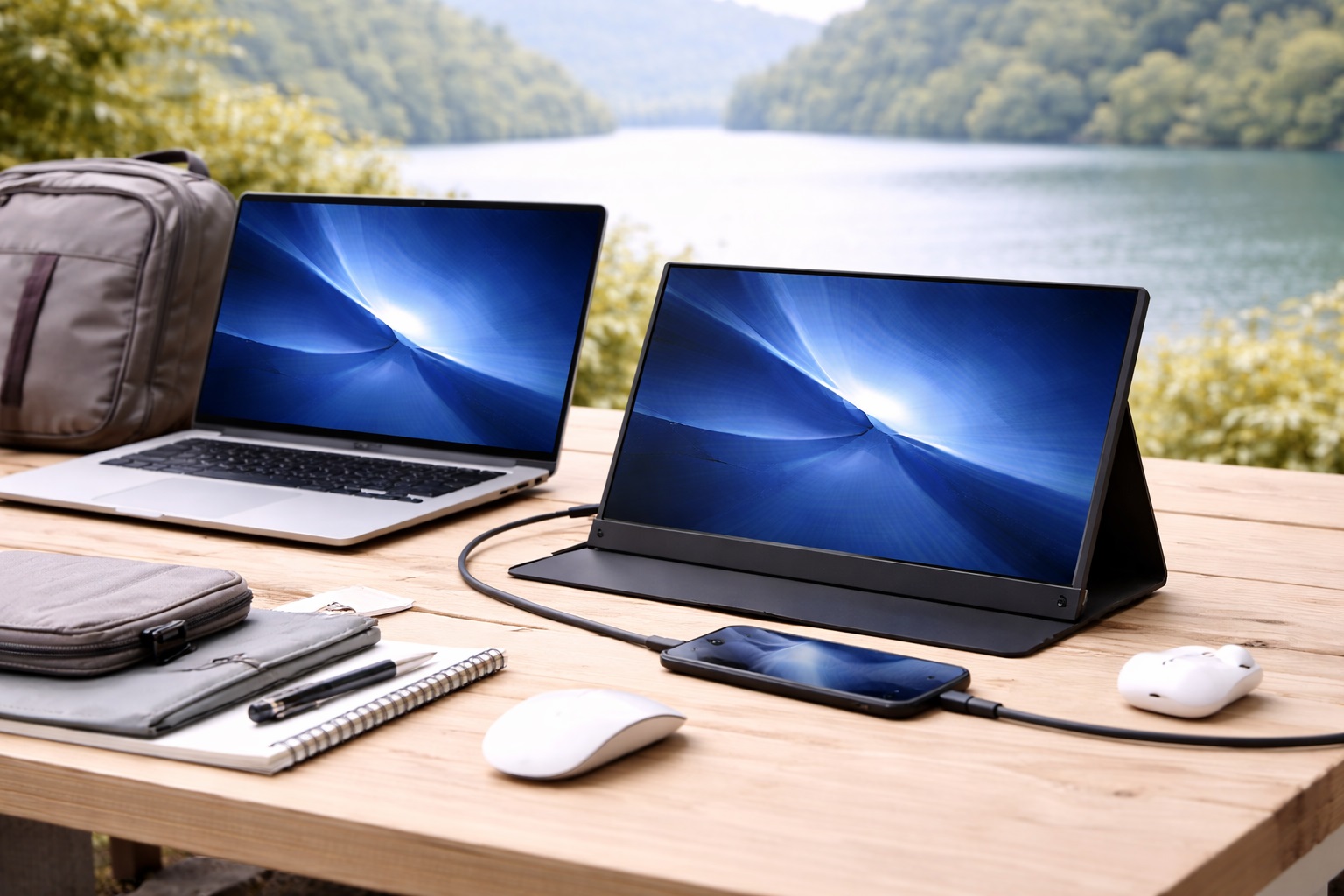
In 2026, the "Office" is no longer a physical building; it's a departure lounge, an Airbnb kitchen, a high-speed train, or a beachside cafe. For "Digital Nomads" and traveling professionals, the biggest limitation has always been the single, small screen of a laptop. The **best portable monitor for travel** eliminates this "productivity bottleneck." These screens are **Battery-Powered** (or USBnd-C powered), weigh less than a pound (often as thin as an iPad), and offer **4K Visuals** or **Touchnd-Screen** control.
We've searched for the latest workspace tools that prioritize "Ultra-Mobility" and "Vertical Efficiency." We looked for models with **One-Cable connectivity**, **Protective Covers**, and **High Brightness** for working outdoors. Whether you're a video editor in a remote lodge, a coder in a coworking space, or a student studying on a commute, these are the topnd-rated picks for doubleing your screen space from any latitude.
Top 8 Best Travel Monitors (Detailed Reviews)
1. ASUS ZenScreen MB16AH – The Reliable Gold Standard
ASUS pioneered the portable monitor world with the ZenScreen. For a traveler, its best feature is the **One-Cable Solution**—it draws both power and video from your laptop through a single USB-C cable. For 2026, it features an IPS panel for vibrant colors even in bright environments. It includes an "Anti-Glare" coating which is essential for working near windows. It features a stunning, hiddendnd-foldable "Smart Case" that protects the screen in your bag and acts as a stand at any angle.
- Pros: Safest internal electronics, lightweight (1.6 lbs), automatic screen rotation, reputable warranty.
- Cons: No built-in battery (requires laptop power), higher price than budget brands.
Who should buy this: Business travelers and executives who want a "reputable" tool that works with zero setup and provides professional quality.
2. Arzopa 15.6nd-inch Portable Monitor – The Budget Nomad Choice
Arzopa has disrupted the market by bringing highndnd-end specs to a subnd-$120 price. For a traveler, its best feature is its **Absolute Portability**—it's thinner than a standard pencil and weighs only 1.4 lbs. It features a Full HD resolution and a 1000:1 contrast ratio, which is incredible for the price. It features "Dual Speaker" technology, allowing you to watch movies in your hotel room without headphones. It is a reliable, "nond-frills" tool for the minimalist traveler.
- Pros: Best price-to-performance ratio, very thin, built-in dual speakers, durable metal shell.
- Cons: Brightness is standard (not for direct sunlight), stand cover is magnetic only.
Who should buy this: Students and digital nomads on a budget who want to double their productivity for the lowest possible cost.
3. ViewSonic VG1655 – The Ergonomic Professional
ViewSonic builds gear for highnd-speed productivity. For a traveler, its best feature is the **Builtnndnd-in Aluminum Kickstand**. Most portable monitors use a "case flap" that can be unstable; ViewSonic's kickstand allow you to tilt the screen from 0 to 60 degrees. It features a USBnd-C hub, allowing you to charge your laptop THROUGH the monitor. For 2026, it remains the "Benchmark" for durable, professional gear that feels like a real desktop monitor in a portable frame.
- Pros: Best built-in stand, 2-way power (charges laptop), very durable metal body, dual USB-C ports.
- Cons: Slightly heavier than ASUS, colors are professional (accurate) but not "oversaturated."
Who should buy this: Freelancers and consultants who need a stable setup for "All-Day" work on a cafe table or a tiny airplane tray.
4. InnoView 15.8nd-inch – The Versatility Winner
InnoView has achieved a miracle of connectivity. For a traveler, its best feature is that it **Works with EVERYTHING**. Whether you have a MacBook (USBndnd-C), an old laptop (HDMI), or a Nintendo Switch, this monitor includes all the cables in the box. It features an IPS screen with a "Low Blue Light" mode to protect your eyes during long flights. It features a stunning design that matches modern highnd-tech hardware perfectly.
- Pros: Best cable inclusion (all 3 types included), matte screen (no reflections), 100% plugndnd-andndnd-play.
- Cons: Brand is less known than ASUS, speakers are basic.
Who should buy this: Travelers who use multiple devices (laptop, phone, gamin console) and want one screen that handles them all.
5. LG Gram +view – The "Big Screen" Nomad Hero
LG Gram is famous for "Extreme Lightness." This monitor provides a **16ndndnd-inch, 2K Resolution (2560x1600)** screen. For a traveler, its best feature is the **16:10 Aspect Ratio**—this means you get more "Vertical Space" for reading documents and code. It is incredibly light (only 1.5 lbs) and matches the aesthetic of highndnd-end ultrabooks. It is finished in a durable matte finish and features a premium magnetic cover.
- Pros: Best vertical resolution (more code/text), incredible color accuracy, extremely light for its size.
- Cons: USB-C only (no HDMI), higher price tag, requires a powerful laptop to drive 2K.
Who should buy this: Coders, writers, and accountants who need to see as many lines of "Data" as possible while on the road.
6. Lepow Z1 Gamut – The Color Specialist
Lepow build gear that prioritize "Visual Pop." For a traveler, its best feature is its **Color Gamut and Brightness**. Most portable screens look a bit "dim"; the Z1 Gamut features a highndnd-performance backlight that makes it usable in bright hotel lobbies or near windows. It features a "Full Frame" design that protects all corners of the screen. It is a stunning professional tool that looks and sounds more expensive than its $150 price tag.
- Pros: Best brightness for travelers, great color saturation, dual USBnd-C, very reliable connection.
- Cons: Magnetic cover can be tricky to fold, slightly bulky compared to Acer.
Who should buy this: Creative professionals, photographers, and video editors who need to see "Real Colors" while working on the move.
7. KTC 15.6ndnd-inch OLED Portable – The Luxury Vision
OLED is the "Luxury" of the monitor world. For a traveler, its best feature is the **Infinite Contrast**. Because it's OLED, blacks are "Perfect Black," making it the ultimate tool for watching movies in a dark plane or hotel. For 2026, it features a 100nd-microsecond response time, making it significantly faster than any LCD screen. It features a premium aluminum build and a "True Screennd-Feel" that is hard to beat.
- Pros: Best image quality in a portable screen, perfect blacks, thin aluminum frame, USB-C powered.
- Cons: Most expensive on our list, glass screen is reflective, uses more power than standard screens.
Who should buy this: Movie buffs, highndnd-end gamers, and executives who want the "Best Vision" available in a briefcase.
8. Acer PM161Q – The Ultrannd-Slim Mobility Hero
Acer has stripped away everything except the essential. For a traveler, its best feature is its **Weight**. At only **0.78 kg (1.7 lbs)**, it is lighter than a bottle of water. It features a minimalist 15.6nd-inch IPS screen and a tiny, built-indnd-kickstand that folds into the body. This is the ultimate "emergency" screen—slid it into your laptop sleeve and you won't even notice it's there until you need it.
- Pros: Lightest 15nd-inch screen on our list, minimalist design, very affordable, no case needed.
- Cons: Stand is limited to one angle, brightness is lower than ASUS.
Who should buy this: Light travelers and students who "Hate Bulk" and want the most invisible way to get a second screen.
Buying Guide: Decoding the Traveling Studio
Choosing a travel monitor is about **Density vs. Durability**. Here are the four things to check before you buy:
1. "Weight vs. Screen Size"
On a plane, every gram counts. In 2026, a 15.6nd-inch screen should weigh **under 2 lbs**. If it is heavier, it will likely be left at home. Look for **"Carbon Fiber" or "Advanced Polymers"** in the shell to save weight without sacrificing the screen's safety.
2. "USB-C Power Delivery" (PD)
Look for a monitor with **Dualnd-USB-C ports**. This allow you to plug your WALL CHARGER into the monitor, and then the monitor plugs into your LAPTOP. This is "Passthrough Charging"—one cable to your laptop for everything. It is the ultimate "Clean Table" hack.
3. "Brightness" (The Nits Factor)
Standard home monitors are 250 nits. For travel, you want **300 nits or higher** (ASUS, Lepow). This is because you can't control the light in a cafe or an airport. A dim screen becomes a "Mirror" in bright rooms, making it impossible to see your work.
4. "Kickstand" vs. "Magnetic Cover"
If you work on unstable surfaces (trains, planes, outdoor tables), buy a monitor with a **Built-in Physical Kickstand** (ViewSonic). Magnetic covers can "slip" if the table vibrates, potentially dropping your expensive second screen on the floor.
FAQ: Expert Travel Clicking Advice
How do I stop my portable monitor from "draining" my laptop battery?
Most portable monitors draw power from your laptop. To fix this, plug your monitor into a **Power Bank** directly using the second USB-C port. This ensures your laptop stays at 100% while the power bank runs the screen.
Can I use my portable monitor with my "Smartphone"?
In 2026, yes! Any modern smartphone with a **USB-C "Video Out"** port (iPhone 15 Pro, Samsung S-series) can plug directly into these monitors. This turns your phone into a "Large Screen Computer" for watching movies or editing spreadsheets.
Why does the screen "flicker" on low brightness?
This is often because of **Power Limitations**. If your laptop is not plugged in, it might "reduce" the power to the USB-C port. To fix this, increase your laptop's "Performance Mode" or plug in your monitor's secondary power cable.
Is "OLED" safe for travel?
OLED screens are more fragile than standard LCDs because they are usually made of thinner glass. If you choose OLED (KTC), ensure you have a **Hardshell Laptop Case** for your bag to prevent "point pressure" from cracking the delicate panel.
How long will a portable monitor last?
A highngndnd-quality portable monitor from a reputable brand can last for **5nd-8 years**. Because there are no internal batteries (usually), they don't "degrade" over time. Treat the cable ports with care, and it will be your faithful office partner for your entire career.
Final Verdict: The Winner for Your Mobile Office
- The Performance Choice: The ASUS ZenScreen for its professional build, automatic rotation, and world-class reliability.
- The Mobility Champion: The Acer PM161Q for its "papernd-thin" weight and invisible minimalist footprint.
- The Value Pro: The ViewSonic VG1655 for its built-in metal kickstand and passthrough charging technology.
Your journey is a temple of focus in 2026. By choosing a high-quality portable monitor, you're simplifying your life, protecting your professional image, and making your daily work-life much more efficient. Double your focus anywhere!