Best Power Bank for Beginners in 2026: Simple, Reliable, and Safe
If you've ever been stranded with a dead phone and felt the panic of not being able to call a ride or check a map, you know why a power bank is necessary. But for a beginner, looking at a wall of chargers with numbers like "10,000mAh," "65W PD," and "GaN" can be confusing. The **best power bank for beginners** strips away the jargon and focuses on three things: **Simplicity** (it should be easy to charge and use), **Reliability** (it should work every time you need it), and **Safety** (it won't overheat or damage your expensive devices).
We've hand-picked the most user-friendly power banks of 2026. These models were selected for their clear battery indicators, "no-guesswork" charging speeds, and rock-solid brand reputations. Whether you're a student, a parent, or someone who just wants a backup for their bag, these picks are the perfect entry point into portable power. No technical degree required—just plug it in and power up.
Top 8 Best Beginner-Friendly Power Banks (Detailed Reviews)
1. Anker PowerCore 10K (2025 Model) – The Gold Standard
Anker is the most trusted name in charging for a reason. Their standard 10,000mAh PowerCore is the absolute best place to start. It’s about the size of a deck of cards, fits in any pocket, and features a simple "4-LED" light system to show how much juice is left. It uses Anker's "PowerIQ" technology, which automatically detects your device (iPhone, Android, or earbuds) and delivers the fastest safe speed—so you never have to worry about "settings" or "compatibility."
- Pros: Incredibly reliable, simple "no-guesswork" charging, very compact, industry-leading safety warranty.
- Cons: Only one USB-C port, simple LED lights instead of a percentage screen.
Who should buy this: Anyone who wants a simple, high-quality "insurance policy" for their phone battery.
2. INIU MegaPower 10,000mAh – The Best Value Starter
INIU has become a massive favorite because they provide high-end features at a very low price. This bank features a unique "Paw Print" battery indicator that kids and adults alike find charming. It includes a built-in "Flashlight" (which is great for finding things in a dark bag) and comes with a 3-year warranty—longer than most expensive brands. It includes both USB-C and USB-A ports, so it works with all your old and new cables.
- Pros: Extremely affordable, built-in flashlight, fun battery indicator, 3-year warranty.
- Cons: Charging isn't as fast as more expensive models, slightly larger than the Anker.
Who should buy this: Students and budget-conscious buyers who want a lot of features for under $30.
3. iWalk LinkPod – The "No-Cable" Convenience Pick
The biggest problem beginners have is forgetting their charging cable. The iWalk LinkPod solves this by having the charging tip **integrated directly into the bank**. You just plug the whole battery into the bottom of your phone. It’s about the size of a lipstick and is light enough to keep using your phone while it’s charging. It’s the ultimate "emergency" battery that you can keep in a purse or glove box.
- Pros: No cables required, tiny and lightweight, allows you to use your phone easily while charging.
- Cons: Low capacity (5,000mAh - about 1 full charge), tip can be fragile if you drop the phone.
Who should buy this: People who hate carrying cables and want an easy "top-up" for their commute.
4. UGREEN Nexode 20,000mAh – Best for Families
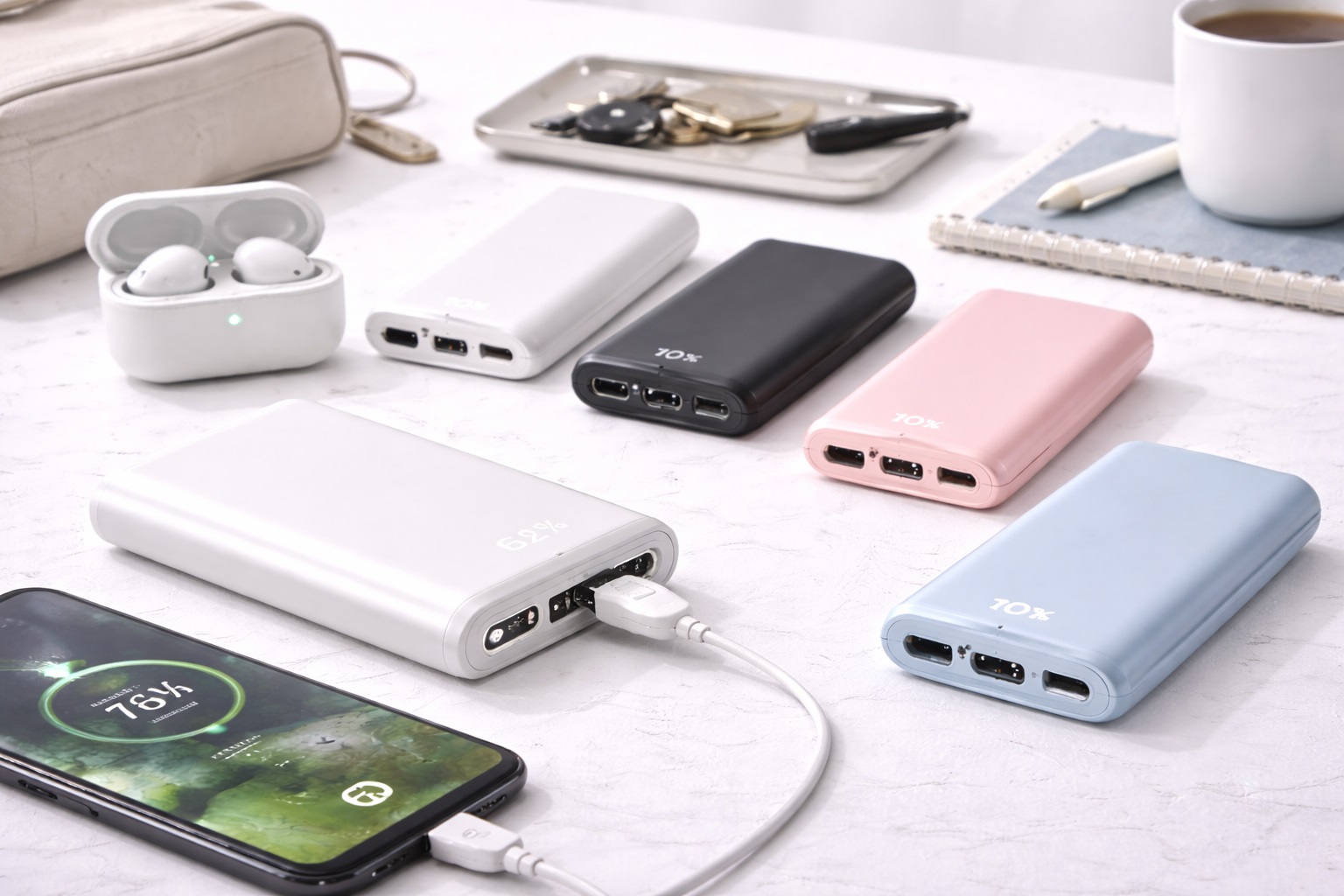
If you're a "beginner" who needs to charge more than one device (maybe your phone and a tablet, or a partner's phone too), this UGREEN unit is the winner. It has a higher capacity (20,000mAh), which means it can charge an average phone 4-5 times over a weekend. It features a digital screen that shows the exact percentage (e.g., "78%"), which many beginners find much more helpful than vague blinking lights.
- Pros: Massive capacity for a long weekend, clear digital display, charges 3 devices at once, 45W fast charging.
- Cons: Heavier than the 10K models (about the weight of a can of soda), more expensive.
Who should buy this: Parents traveling with kids or anyone who wants a "multi-day" power source.
5. Belkin BoostCharge Pro – The Safe & Certified Choice
Many beginners are worried about damaging their expensive iPhones. Belkin works closely with Apple and is "MFi Certified," meaning their products are guaranteed to be safe for Apple devices. This 10,000mAh bank features a very high-quality build and supports "Pass-Through Charging," which means you can plug the bank into the wall and your phone into the bank at the same time—perfect for hotel rooms with only one outlet.
- Pros: Apple-certified safety, beautiful design, can charge bank and phone at once, very reliable.
- Cons: Higher price than budget brands, simple LED indicators.
Who should buy this: iPhone users who prioritize safety and peace of mind above all else.
6. JLab Go Power Bank with Integrated Cable – The "Never-Lost" Pro
JLab is famous for building tech into their designs. This power bank features a **built-in USB-C cable** that is tucked into the side. You will never be stuck without a cable again. It’s a 10,000mAh unit that is very slim and carries a 2-year warranty. The "one-piece" design makes it very popular for students who might lose individual cables in their backpacks.
- Pros: Integrated cable, slim and flat, very affordable, 2-year warranty.
- Cons: If the cable breaks, you have to use the extra port, charging speed is standard.
Who should buy this: Students and disorganized travelers who want a single "all-in-one" charging solution.
7. Nimble Champ Lite – The Simple Green Choice
If you're a beginner who cares about the environment, Nimble is the choice. Their "Champ Lite" is made from **72.5% recycled materials**. It’s incredibly small (smaller than a wallet) and focused purely on performance. They even include a free mail-in bag so you can recycle your old, dead electronics for free. It’s a feel-good way to get high-quality tech.
- Pros: Smallest overall brand name bank, environmentally friendly, includes free recycling, powerful 18W charging.
- Cons: Minimalist features, no flashlight or screen.
Who should buy this: Eco-conscious buyers who want the smallest, simplest high-quality bank available.
8. Goal Zero Flip 36 – The Indestructible Backup
For someone who is "tough" on their things, the Goal Zero Flip is the answer. It has an aluminum shell that can take a drop or being crushed in a heavy bag. For a beginner, its best feature is the "Flip" USB tip; you just fold it out and plug it into any phone charger or computer to recharge it—no cables needed to charge the bank itself. It’s an old-school, reliable piece of gear.
- Pros: Hard aluminum shell, no cables needed to charge the bank, very reliable, great for camping.
- Cons: Only one port total, slow charging (doesn't support modern "Fast Charging").
Who should buy this: Campers, hikers, and people who work in physical jobs and need a battery that won't break.
Buying Guide: A Beginner’s Vocabulary
You don't need to be an engineer, but knowing these three terms will help you buy the right product:
1. What is "mAh"? (The Fuel Tank)
This is the capacity. * **5,000mAh:** Roughly 1 full charge for an average phone. * **10,000mAh:** Roughly 2-3 full charges. (The best "all-day" choice). * **20,000mAh:** Roughly 4-5 full charges. (Great for long trips).
2. What is "W" (Wattage)? (The Speed)
This is how fast it charges. * **5W-10W:** Very slow (like old phone chargers). * **18W-20W:** "Standard Fast Charging" (good for phones). * **45W-65W:** "Laptop Speed" (needed if you want to charge a computer).
3. USB-C vs. USB-A
In 2026, you want **USB-C**. It is the oval-shaped port that is becoming the standard for everything. A bank with two USB-C ports is much more "future-proof" than one with the older, rectangular USB-A ports.
FAQ: Expert Tips for New Users
How do I know when the power bank is "full"?
Most banks have 4 lights. When you're charging it, the lights will blink one by one. When all 4 lights are solid (stop blinking), the bank is 100% full. If you have a digital screen, it will clearly say "100%."
Can I use my power bank while I'm on a plane?
Yes! In fact, you MUST carry your power bank in your "Carry-on" luggage. Airlines do not allow them in the belly of the plane (checked bags) for safety reasons. You can use it during the flight to keep your movies and games going.
Will a "Fast Charger" damage my old phone?
No. Quality brands like Anker and UGREEN have smart chips that "talk" to your device. They will only give it as much power as it can safely handle. You can plug a tiny pair of earbuds into a large laptop charger, and it will be perfectly safe.
How long will the battery last in a drawer?
A good power bank will hold its charge for about **3 to 6 months**. However, it’s a good idea to "check the lights" every month and top it up if it falls below half, especially if you’re keeping it for emergencies.
Why does my power bank get warm?
Moving electricity creates heat! It is normal for a power bank to be warm to the touch while charging a phone. However, if it’s **too hot to hold**, unplug it immediately. Always keep your bank in a ventilated area—don't charge it inside a tight, enclosed pocket.
Final Verdict: The Best Winner for Beginners
- The Best Overall: The Anker PowerCore 10K for its simplicity and reputation.
- The Best Value: The INIU MegaPower for those who want extra features (flashlight, screen) for less money.
- The Best "Emergency" Pick: The iWalk LinkPod for people who always forget their cables.
Portable power isn't complicated once you have the right tool. By choosing one of these beginner-friendly power banks, you're taking the first step toward a more reliable, stress-free digital life. Never worry about an "Empty Battery" again—take control of your power today!