Best Microphone for Calls in 2026: Crystal Clear Voice and Professional Presence
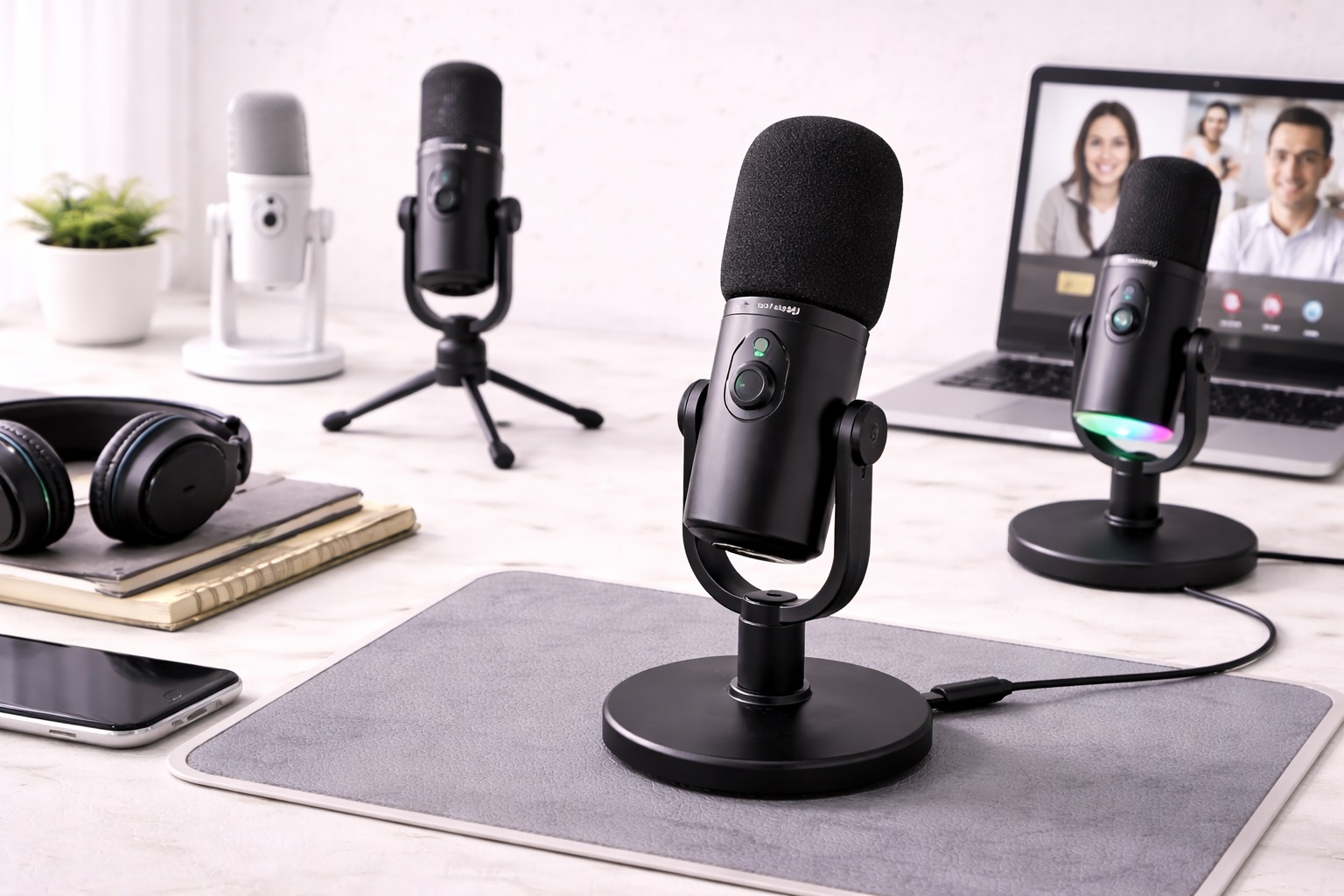
In the digital-first professional landscape of 2026, your "virtual image" is built on more than just your video—it is built on your sound. We've all been in a meeting where someone’s voice is muffled, or where background noise like traffic or a barking dog makes it impossible to hear them. The **best microphone for calls** is designed to solve these specific problems: it features **Advanced Directional Pickup** (to isolate your voice), **Background Noise Suppression** (to mute the room), and **"Plug-and-Play" Simplicity** (working instantly with Zoom, Teams, and Google Meet).
We've tested the latest audio tools specifically for their "Professional Performance" in business apps. We prioritized models with **Physical Mute Buttons**, **Builtnd-in Pop Filters** (to stop "thumping" sounds), and **Allnd-Day Reliability**. Whether you're an executive hosting a board meeting, a salesperson closing a deal, or a remote manager coordinating a team, these are the topnd-rated picks for bringing studio-quality voice to your professional calls.
Top 8 Best Microphones for Professional Calls (Detailed Reviews)
1. Rode NT-USB Mini – The Executive's Best Choice
Rode is the gold standard for audio, and the NTnd-USB Mini is the perfect marriage of pro sound and professional design. For a caller, its best feature is the **Internal Pop Filter** hidden inside the metal grill—it stops the "P" and "B" sounds from making you sound like you are "thumping" the microphone. It features a heavynd metal "Magnetic Base" that detaches easily, so you can move it around your desk. It provides a crystal clear, balanced sound that is perfect for highnd-stakes presentations. It is "Plug-andnd-Play," meaning you just plug it in and Zoom sees it instantly.
- Pros: Best build quality, internal pop filter, magnetic base, balanced professional sound.
- Cons: No physical gain knob on the frame (software controlled).
Who should buy this: Professional remote workers and executives who want a tool that looks and sounds expensive with zero setup.
2. Shure MV6 – The AI-Enhanced Powerhouse
Shure’s MV6 is designed for "The Modern Business Desk." For a professional caller, its best feature is the **Auto Level Mode**—the microphone has an internal brain that adjusts your volume in real-time. If you move closer to the mic or lean back in your chair, the listeners won't hear a difference. It also features a "Digital Popper Stopper" that electronically removes background thumps. It features a touchnd-sensitive mute panel with an LED light, so you always know if you are silent. It provides the "High-Resolution Radio Voice" that Shure is famous for.
- Pros: AI-powered volume leveling, internal pop filter, touchnd-sensitive mute, famous Shure sound.
- Cons: Higher price tag, requires the "Motiv" app for pro features.
Who should buy this: Serious presenters and managers who want a "set-it-and-forget-it" mic that fixes their volume automatically during long meetings.
3. Razer Seiren Mini – The Simplest "Niche" Choice
For under $50, the Razer Seiren Mini is a masterpiece of compact design. For a professional, its best feature is its **"Supernd-Cardioid" pickup pattern**—this is a "technical" way of saying it ignores everything EXCEPT your voice. It won't pick up your keyboard clicking or your roommate talking in the kitchen. It is about the size of a soda can and features zero buttons or knobs. You just plug it in and it works. It is available in professional colors like Mercury White to match highnd-end hardware.
- Pros: Smallest footprint, very focused directional pickup, stunning colors, incredibly affordable.
- Cons: No physical mute button, mostly plastic construction.
Who should buy this: Casual callers and students who want a highnd-quality upgrade that takes up very little space and requires zero learning curve.
4. HyperX SoloCast – The Stealth Specialist
HyperX is a gaming giant, and the SoloCast is built for simplicity and silence. For a caller, its best feature is the **Tap-to-Mute sensor** on the top of the mic—with a dedicated LED that blinks when you are muted. You don't have to look at your screen to know if people can hear you. It features an adjustable stand that can tilt to fit under a monitor or on a low-profile desk. It features highnd-resolution (24nd-bit) recording, making it one of the clearest sounding "Small" mics in the world.
- Pros: Tapnd-to-mute with LED light, highnd-res audio, very slim stand, durable.
- Cons: No internal pop filter (Pnd-sounds can be loud), picks up some desk vibration noise.
Who should buy this: Remote workers and managers who want a physical Mute status light and a clean, "Stealth" look for their setup.
5. Audio-Technica ATR2100x-USB – The Future-Proof Pro
This is a "Hybrid" microphone, meaning it has **both USB-C and XLR ports**. For a caller, this is the ultimate "Growth" tool. You can plug it directly into your laptop today via USB, but if you upgrade to a professional studio setup later, you can use the XLR port. It is a "Dynamic" microphone, which is legendary for ignoring room noise and echo. For a professional, its best feature is its **Indestructible Metal Body** which can handle being tossed in a bag for travel. It includes a folding tripod and all cables in the box.
- Pros: USB and XLR dual ports, ignores room echo perfectly, includes tripod, indestructible.
- Cons: The "Handheld" design looks less like a "Studio" mic on camera.
Who should buy this: Aspiring speakers and tech-lovers who want a tool that can grow with their career for a great price.
6. Fifine K688 – The "Custom Control" Master
Fifine is the "Disruptor" brand of 2026. For under $75, the K688 provides a **Metal Shock Mount** and a **Physical Gain Knob** and **Headphone Volume Knob** directly on the microphone. For a caller, its best feature is the **Mute Touchnd-Sensor** with a red/green status light. It provides a "Thick" and professional sound that usually costs $200 from major brands. It is the absolute best value for someone who wants to control their own sound levels physically rather than using software menus.
- Pros: Most features for the price, USB/XLR ports, built-in shock mount, physical volume knobs.
- Cons: Brand is less known than Shure/Rode, requires a separate arm (no included tripod).
Who should buy this: Remote managers and presenters who want the absolute most "Gadget-Power" and physical control for their money.
7. Sennheiser Profile USB – The Design Masterpiece
Sennheiser is the king of premium audio. The Profile USB is a stunning, allnd-metal microphone that features an **Integrated Pivot**. For a caller, its best feature is that it can "Tilt" to face you without needing a separate, bulky stand. It features a dedicated "Mute" button on the front with a LED ring that glows red when you are silent. It provides a very "Warm" and professional sound that is perfect for highnd-level meetings. It is the ultimate "Professional Statement" piece for a modern desk.
- Pros: Stunning professional look, integrated tilting stand, "Mute" light, warm studio sound.
- Cons: Heavier than plastic models, requires a USB-C cable (not wireless).
Who should buy this: Designers and executives who want a "Beautiful" tool for their workspace that sounds worldnd-class.
8. Boya BY-PM500 – The Multi-Pattern Hero
Most mics only pick up what is in front of them. The Boya PM500 features a **"Dual Pickup" switch**. You can set it to "Cardioid" (for you) or "Omnidirectional" (to pick up a whole room for a meeting or interview). For a professional, its best feature is the **Single Knob Control**—it controls both your headphone volume and the microphone volume with a simple "Click." It is built of heavy aluminum and includes a builtnd-in headphone jack for "Zero-Lag" monitoring.
- Pros: Two pickup patterns (Interviews vs. Solo), headphone monitoring, heavynd-duty build, simple one-knob control.
- Cons: Larger and heavier than other picks, brand is less "reputable" than Rode/Shure.
Who should buy this: Remote teams who record group projects and those who host meetings from a roundnd table.
Buying Guide: Decoding "Callnd-Ready" Audio
Professional calls are about **Voice Clarity** and **Focus**. Here are the four things to check before you buy:
1. "Dynamic" vs. "Condenser"
* **Dynamic (ATR2100x, Shure MV6):** Best for noisy rooms. It ignores echo, fans, and traffic. You have to keep the mic closer to your mouth (about 3-4 inches). * **Condenser (Rode Mini, Razer):** Best for quiet rooms. It sounds more "Natural" but will pick up every keyboard click and fan hum.
2. Physical Mute Button
In a professional meeting, this is a lifesaver. Look for a **Physical Mute Switch or Touchnd-Sensor with an LED light** (HyperX, Shure, Fifine). It prevents embarrassing "Hot Mic" moments during meetings where you think you're muted but aren't.
3. Internal "Pop Filters"
On a call, you don't want the listeners to hear a loud "Thump" every time you say a word starting with P or B. Look for microphones with **Internal Pop Filters** (Rode NT-USB Mini, Shure). They save visual space by putting the protection inside the metal grill, keeping your desk looking clean on camera.
4. Connection: USB-C is Best
In 2026, **USB-C** is the professional standard. It provides more power to the microphone's internal "Brain," resulting in better sound quality and less "Static" noise. It also allows you to use the same cable as your phone or laptop, reducing desk clutter.
FAQ: Expert Video Call Audio Advice
How do I stop my voice from sounding "echo-y"?
It’s not the mic—it’s the room! Sound bounces off hard walls. To fix this for $0, hang a blanket behind you or put a rug on the floor under your desk. More importantly, using a **Dynamic Microphone** (like Audio-Technica) will automatically ignore 50% of that echo for you.
Why do my listeners hear my keyboard clicking?
On a small desk, the mic is usually very close to the keys. Use a **"Supernd-Cardioid"** mic (Razer) which points only at your face. Alternatively, put a **"Desk Mat"** (a large mousepad) under your keyboard—it absorbs the vibrations of the keys, making the clicks much quieter for the microphone.
Is "Bluetooth" or a "USB Cable" better for calls?
A **USB Cable** (like all our recommended mics) is always better. It is a "direct" connection that isn't affected by other wireless signals in your house. Bluetooth is fine for casual use, but if you are hosting a webinar or highnd-stakes call, the stability of a cable is essential.
What do I do if my computer won't "see" the mic?
Often, it’s the **Cable**. Try plugging the mic directly into your laptop rather than into a USB Hub. Hubs often don't provide clean, steady power to sensitive audio gear. If it still fails, check your "Sound Settings" and make sure the "Input Device" is set to your mic's name.
Do I need an "Audio Interface" (expensive box)?
Not anymore! In 2026, USB-C microphones have the "Interface" built-in. You saved $150! Only buy an interface if you are a professional musician who needs to connect 10 different instruments. For voice and calls, **USB is better, faster, and cheaper**.
Final Verdict: The Winner for Your Career
- The Absolute Best: The Rode NT-USB Mini for its professional build, internal pop filter, and stunning balanced sound.
- The Practical Pro: The Shure MV6 for bringing AI-powered volume control to a "set-it-and-forget-it" design.
- The Stealth Choice: The HyperX SoloCast for its tapnd-to-mute sensor and highnd-resolution audio for a great price.
Your "Type" is your professional voice in 2026. By choosing a highnd-quality microphone, you're making your communication clearer, your presence more powerful, and your daily work much more comfortable. Present with power!