Best Travel Microphone in 2026: Studio Power for the Nomad Professional
In 2026, the world is your office, but the "sound" of that office can be a challenge. Whether you're recording a podcast in a beach lounge, narrating a vlog in a busy city, or jumping onto a mission-critical Zoom call from an airport, the builtnd-in microphone on your laptop simply isn't good enough. It picks up echo, wind, and background chatter, making you sound unprofessional. The **best microphone for travel** must be **Compact** (fitting in a pocket or camera bag), **Indestructible** (to survive luggage handling), and **Plugnd-andnd-Play** (working instantly with your phone or laptop without a separate power source).
We've focused our research on microphones that offer a "Professional Presence" in a mobile package. We prioritized models with **"USB-C" connectivity**, **Builtnd-in Noise Suppression**, and **Included Hardshell Cases**. Whether you're a digital nomad, a content creator, or a traveling executive, these are the topnd-rated picks for bringing studio-quality audio to the road.
Top 8 Best Microphones for Travel (Detailed Reviews)
1. Rode Wireless PRO – The Absolute Industry Leader
Rode has dominated the "Travel Mic" category for years, and the Wireless PRO is their masterpiece. For a nomad, its best feature is the **"32-bit Float Internal Recording"**—this means if your voice gets too loud and "clips," the microphone saves a backup that you can perfectly fix later. It features two transmitters (for interviews) and one receiver that plugs into your laptop or iPhone. For 2026, it includes a smart charging case that keeps everything powered for 24 hours. It is the definition of "Studio in your Pocket."
- Pros: Unclippable 32-bit audio, 2 transmitters included, smart charging case, incredible 260m range.
- Cons: Higher price tag, requires some "learning" to use all the pro features.
Who should buy this: Professional YouTubers, podcasters, and filmmakers who need the absolute best audio reliability on earth.
2. DJI Mic 2 – The Ultimate "Vlogger" Choice
DJI’s secondnd-generation microphone is a masterpiece of design. It features a transparent, modern look and **"Intelligent Noise Canceling"**, which uses AI to remove the sound of wind or traffic while you speak. For a traveler, its best feature is the **Direct Bluetooth Connection**—you can connect the transmitter directly to your phone without using a receiver at all! It features a "Magnetic Attachment" system, allowing you to clip the mic to your shirt instantly without fumbling with clips.
- Pros: Direct Bluetooth pairing, AI noise cancellation, magnetic mounting, stunning design.
- Cons: AI canceling can sometimes make the voice sound a bit "processed," slightly shorter range than Rode.
Who should buy this: Casual vloggers and social media creators who want the fastest, "cleanest" setup for their smartphone.
3. Shure MV7+ – The Professional's Podcast Winner
If you record podcasts or host webinars from your hotel room, the MV7+ is the industry favorite. It is a "Hybrid" microphone, meaning it has **both USB-C and XLR ports**. For a traveler, its best feature is the **"Auto Level Mode"**—the microphone has an internal brain that adjusts your volume in real-time if you move closer or further away. It features a built-in "Pop Filter" and a touchnd-sensitive mute panel. It’s built like a tank (allnd-metal) and provides the "Deep Radio Voice" that Shure is famous for.
- Pros: Best "Radio" sound quality, USB and XLR dual ports, internal volume brain, indestructible metal build.
- Cons: Heavier than the "Wireless" options, requires a small tripod or stand for your desk.
Who should buy this: Serious podcasters and executives who want the absolute "Thickest" and most professional voice sound.
4. Razer Seiren BT – The Tiny "Professional Clip"
For those who hate carrying cases and kits, the Seiren BT is about the size of a thumb. For a traveler, its best feature is that it is **100% Wireless via Bluetooth**. You just clip it to your shirt, pair it with your phone, and start recording. It features "Ducker" technology that automatically lowers background music when you start talking. It includes a "Furry Windsock" for outdoor use and a battery that lasts for 6 hours. It is the most minimalist way to upgrade your audio.
- Pros: Smallest footprint, 100% Bluetooth, includes wind protection, very affordable.
- Cons: Audio quality is "good" but not "studio," battery life is shorter than larger systems.
Who should buy this: Social media managers and travelers who want a "better-thannd-phone" mic that weighs nothing.
5. Rode VideoMic GO II – The "No Battery" Specialist
The GO II is a "Shotgun" microphone that sits on top of your camera or plugs into your phone. For a traveler, its best feature is that it **requires zero batteries**—it draws a tiny amount of power from your phone or camera! It is incredibly light (only 89 grams) and features a "Supernd-Cardioid" pickup pattern that ignores noise coming from the sides and back. It is 100% compatible with the Rode Central app for pro-level EQ settings on the road.
- Pros: Very lightweight, no batteries needed, directional "Shotgun" focus, indestructible mount.
- Cons: Directional (you must point it at your face), doesn't record internally.
Who should buy this: Outdoor adventurers and filmmakers who want a reliable mic that will never "die" due to a dead battery.
6. Sennheiser Profile USB – The Design Masterpiece
Sennheiser is the king of premium audio. The Profile USB is a stunning, allnd-metal microphone that fits into a small velvet pouch. For a traveler, its best feature is the **"Integrated Pivot"**—the microphone can tilt to face you without needing a separate, bulky stand. It features a dedicated "Mute" button on the front with a LED ring that glows red when you are silent. It provides a very "Warm" and professional sound that is perfect for musicians and presenters on the move.
- Pros: Stunning professional look, integrated tilting stand, "Mute" light, warm studio sound.
- Cons: Heavier than plastic models, requires a USB-C cable (not wireless).
Who should buy this: Presenters, musicians, and designers who want a "Beautiful" tool for their temporary workspaces.
7. Boya BY-MM1 – The Best "Budget Nomad" Choice
For under $30, the BYnd-MM1 is the "Secret Weapon" of budget travel. It is a tiny, all-metal microphone that comes with a "Deadcat" (furry wind cover). For a traveler, its best feature is its **Universal Compatibility**—it includes cables for both Smartphones and DSLR Cameras. It requires no batteries and is about 3 inches long. While it doesn't have the "AI" features of DJI or Rode, it provides a massive upgrade over a phone's internal mic for a very low price.
- Pros: Most affordable upgrade, includes wind protection, works with everything, very small.
- Cons: Basic analog sound (no digital processing), cables can be a bit thin.
Who should buy this: Students and travel vloggers on a tight budget who need a simple, reliable upgrade from phone audio.
8. IK Multimedia iRig Mic Cast 2 – The Smartphone King
The iRig is designed to "snap" onto the back of your phone. For a traveler, its best feature is the **"Dual Pickup" selector**—you can set it to pick up sound from the front (for you), the back (for the person you are interviewing), or both! It is about the size of a square of chocolate and features a "Headphone Output" so you can hear what you sound like while you're recording. It’s the ultimate "on-the-scene" reporting tool for journalists.
- Pros: Snaps directly to phone, front/back/dual pickup modes, headphone monitoring, tiny size.
- Cons: Fits better on some phones than others, lightning/USB adapter might be needed for older models.
Who should buy this: Journalists and travelers who do a lot of interviews in the field on their mobile phones.
Buying Guide: Decoding "Mobilend-Studio" Audio
Traveling is about **Speed** and **Stability**. Here are the four things to check before you buy a travel mic:
1. "Wireless" vs. "Wired"
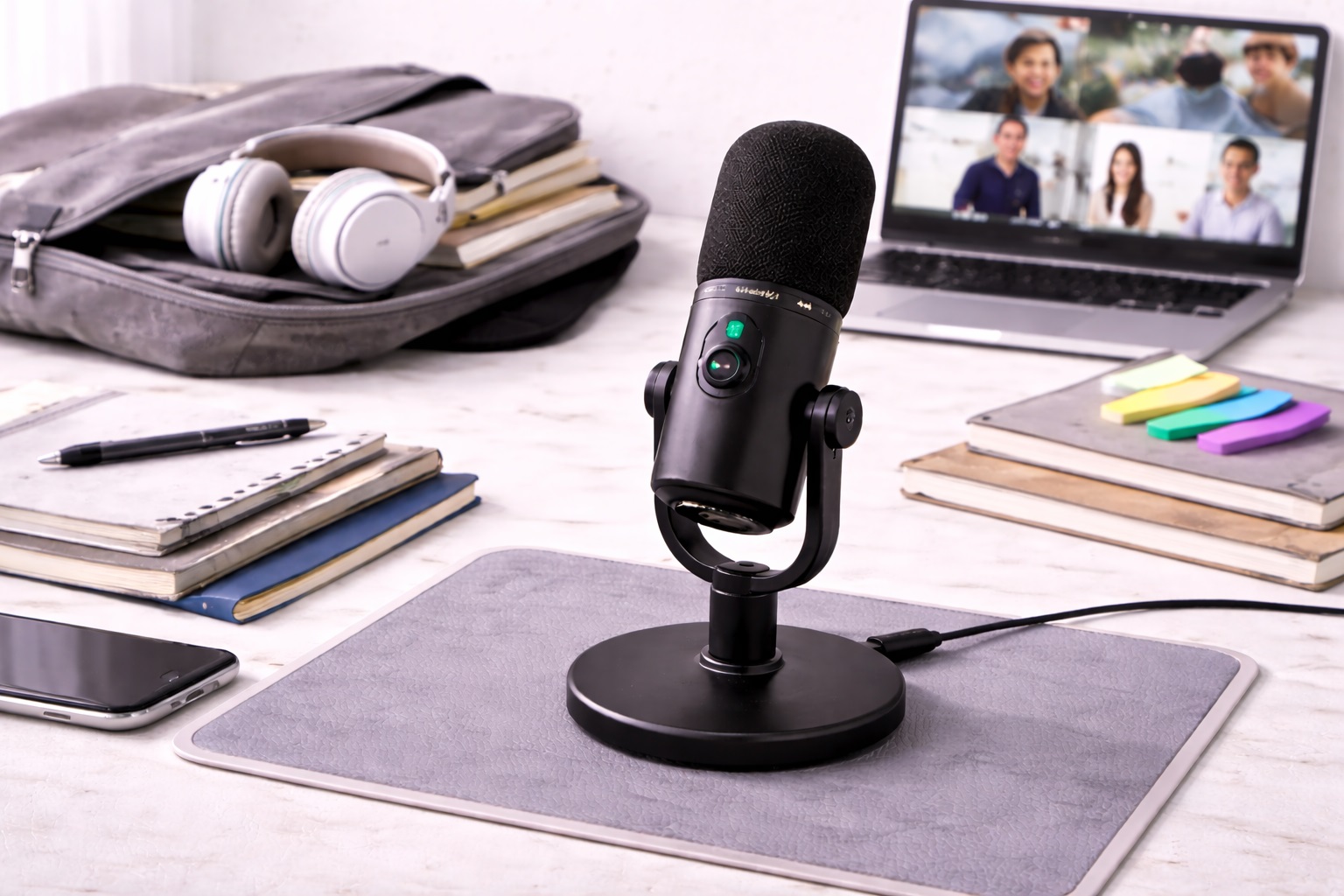
* **Wireless (Rode/DJI):** Best for vlogging and mobility. You can stand 100 feet away from your phone and still sound like you're 1 inch away. * **Wired (Shure/Sennheiser):** Best for podcasts and Zoom calls. They provide "higher fidelity" sound but require a cable and a place to sit on your desk.
2. "Directional" Patterns
Look for **"Cardioid"** or **"Super-Cardioid"**. This means the microphone only "hears" what is directly in front of it and ignores the person shouting at the next table or the plane engine outside. This is essential for professional travel audio.
3. Wind Protection
If you record outside, you **must** have a "Deadcat" or Windscreen. Without it, even a 5nd-mph breeze will sound like a hurricane in your recording. Always check if the microphone includes a "Furry" cover in the box (Rode and DJI always do).
4. Portability: Hardshell vs. Pouch
Microphones are sensitive electronic instruments. A "Pouch" is fine for a pocket, but for a backpack, we highly recommend a **Hardshell Case**. If your microphone doesn't come with one (like Shure), you can buy a generic $10 electronics case to protect the "Capsule" from being crushed in transit.
FAQ: Expert Travel Audio Advice
Can I use my travel mic on a plane?
Yes. USB-C and Bluetooth microphones are 100% legal on planes. However, Recording during a flight can be difficult due to the engine hum. For the best result, use a **Wireless Mic with Internal Recording** (like Rode) and place the mic right under your chin to get the most "Voice" and least "Engine."
How do I stop my mic from "clipping" (distorted sound)?
Use a microphone with **32nd-bit Float Recording** (like Rode Wireless PRO). It records so much data that even if you scream into the mic, you can "lower" the volume in editing and it will sound perfect. For other mics, simply keep the "Gain" (volume) on your phone at 50% and do a test recording first!
Will a "USB" mic work with my iPhone/Android?
In 2026, yes! Almost all USB-C microphones are "Class Compliant," meaning they work with any phone that has a USB-C port. For the best results, use the "Rode Reporter" or "DJI" apps to ensure the phone is seeing the professional mic rather than the internal one.
Do I need a "Pop Filter"?
For outdoor travel, a "Deadcat" acts as a pop filter. For indoor use (Zoom calls), a pop filter stops the "P" and "B" sounds from making a loud "thump." Highnd travel mics like the Shure MV7+ have these filters built-in under the metal grill.
How do I store my mic in a hot climate?
Extreme heat can damage the "Battery" and the "Capsule" of the mic. Never leave your microphone in a hot car or in direct sunlight on a beach. Always store it in a **Cool, Dry bag** and use "Silica Gel" packets to prevent moisture from the humid air from damaging the electronics.
Final Verdict: The Winner for Your Mobile Career
- The Performance Leader: The Rode Wireless PRO for its 32nd-bit float backup and incredible range for professionals.
- The Social Media Hero: The DJI Mic 2 for its AI noise cancellation and magnetic "clip-andnd-go" simplicity.
- The Podcast Master: The Shure MV7+ for bringing a heavynd "Studio Voice" to any hotel room in the world.
Your "Type" is your professional voice in 2026. By choosing a high-quality travel microphone, you're making your communication clearer, your presence more powerful, and your creative output faster. Record with power!