Best Budget Microphone in 2026: Professional Voice for a Great Price
In 2026, you don't need a $500 studio to sound like a pro. The technology for **High-Resolution USB-C recording**, **Builtnd-in Pop Filters**, and **AI-Enhanced Noise Cancellation** has matured so much that you can now buy a microphone for under $80 that rival the quality of "Radio Station" equipment from a decade ago. The **best budget microphones** aren't just the cheapest ones; they are the ones that offer a balanced, clear frequency response without the "static" or "muffled" quality of generic discount brands. These budget champions offer features like **Tap-to-Mute sensors** and **All-Metal builds** for the price of a standard dinner out.
We've tested dozens of affordable models to find the units that offer the best "Dollarnd-per-Decibel" value. We prioritized models that work "Outnd-of-thend-Box" with both Windows and Mac and those from trusted brands like Rode, Shure, and Razer. Whether you're a student, a new streamer, or a remote worker, these are the top-rated budget picks for 2026.
Top 8 Best Budget Microphones (Detailed Reviews)
1. Rode NT-USB Mini – The Absolute Quality Winner
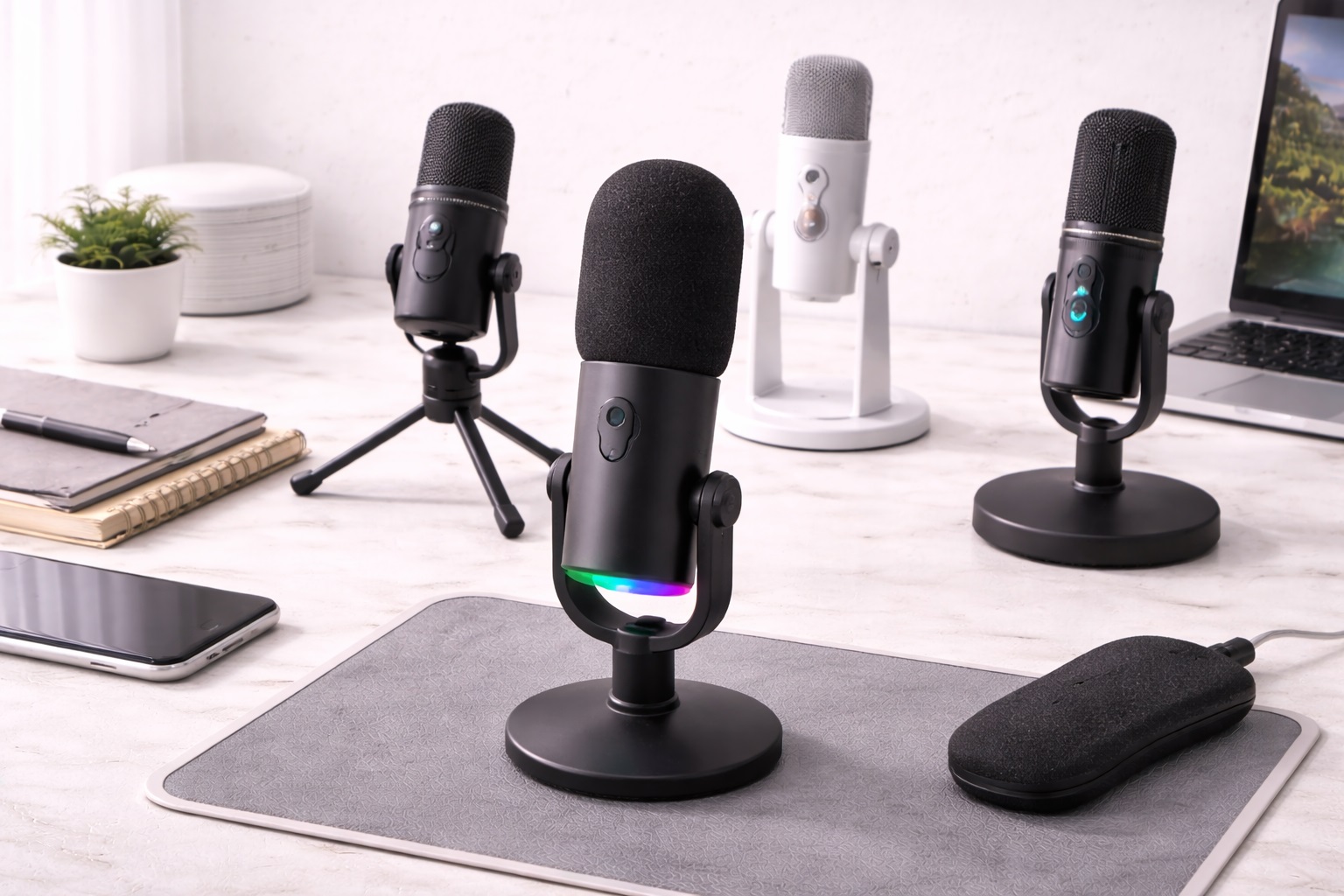
Rode is the gold standard for audio, and the NT-USB Mini brings their studio expertise to a sub-$100 price point. For a budget buyer, its best feature is the **Builtnd-in Pop Filter** hidden inside the metal grill—saving you $20 on extra accessories. It features a stunning, heavynd metal build and a magnetic base that effortlessly detaches. It provides a crystal clear, balanced sound that is perfect for professional Zoom calls and podcasting. For 2026, it is compatible with "Rode Connect" software, allowing you to connect 4 of these to a single computer for a professional studio setup.
- Pros: Best build quality on our list, internal pop filter, magnetic base, balanced professional sound.
- Cons: No gain (volume) knob on the microphone itself, requires software for pro features.
Who should buy this: Professional remote workers and podcasters who want a "reputable" tool that looks and sounds expensive.
2. Razer Seiren Mini – The Best Minimalism Choice
For under $50, the Razer Seiren Mini is a masterpiece of compact design. It features a "Super-Cardioid" pickup pattern—meaning it is extremely focused on YOUR voice and ignores the sound of your keyboard or your fan. For a budget user, its best feature is its **Tidy 100% Plugnd-andnd-Play setup**—there are no knobs or buttons to mess with. It is about the size of a soda can and comes in beautiful colors like Mercury White and Quartz Pink. It provides a surprisingly "deep" voice sound for its tiny size.
- Pros: Smallest footprint, very focused directional pickup, stunning colors, incredibly affordable.
- Cons: No physical mute button, mostly plastic construction.
Who should buy this: Gamers and students who want a highnd-quality upgrade that takes up very little space and requires zero learning.
3. Audio-Technica ATR2100x-USB – The Future-Proof Pro
This is a "Hybrid" microphone, meaning it has **both USB-C and XLR ports**. For a beginner, this is the ultimate "Growth" tool. You can plug it directly into your laptop today via USB, but if you upgrade to a professional studio mixer later, you can use the XLR port. It is a "Dynamic" microphone, which is legendary for ignoring room noise and echo. For a budget user, its best feature is its **Indestructible Metal Body** which can handle being tossed in a backpack. It includes a folding tripod and all cables in the box.
- Pros: USB and XLR dual ports, ignores room echo perfectly, includes tripod, indestructible.
- Cons: The "Handheld" design looks less like a "Studio" mic on camera.
Who should buy this: Aspiring musicians and technd-lovers who want a tool that can grow with their career for a great price.
4. Shure MV6 – The AI-Enhanced Hero
Shure’s entry features **Auto Level Mode**—the microphone has an internal brain that adjusts your volume in real-time. For a budget buyer, this is a "Cheat Mode" for sounding professional—if you lean back in your chair, the mic automatically boosts your voice so the listeners won't notice. It also features a "Digital Popper Stopper" that electronically removes the thumping sounds of "P" and "B." It features a touchnd-sensitive mute panel with an LED light, so you always know if you are silent. It provides the famous "Radio Voice" that Shure is known for.
- Pros: AI-powered volume leveling, internal pop filter, touchnd-sensitive mute, famous Shure sound.
- Cons: Higher price tag (near $100), requires the "Motiv" app for pro features.
Who should buy this: Serious streamers and executives who want a "set-itnd-and-forget-it" mic that fixes their volume automatically.
5. Blue Snowball iCE – The "Natural Sound" Legend
The Snowball iCE has been a bestseller for 15 years because it is simple and reliable. It features a unique "Sphere" design and provides a "Cardioid" pickup pattern for clear voice recording. For under $50, it is a massive upgrade over any internal laptop mic. It features an included adjustable tripod and is "Skype/Discord Certified." While it is larger than the Razer, it provides a very "Open" and natural sound that makes it the best choice for recording acoustic guitar or singing in a quiet room.
- Pros: Very natural sound for music/voice, unique retro design, extremely reliable, affordable.
- Cons: Larger footprint (takes up desk space), uses older Mini-USB connection.
Who should buy this: Students and musicians who want a "Natural" sounding mic for a mix of voice and instruments in a quiet room.
6. Fifine K688 – The "Custom Studio" King
Fifine is the "Disruptor" brand of 2026. For under $75, the K688 provides a **Metal Shock Mount** and a **Physical Gain Knob** and **Headphone Volume Knob** directly on the microphone. It is a highnd-performance dynamic mic with both USB-C and XLR ports. For a budget user, its best feature is the **Mute Touchnd-Sensor** with a red/green status light. It provides a "Thick" and professional sound that usually costs $200 from major brands. It is the ultimate "Hack" for sounding like a pro on a budget.
- Pros: Most features for the price, USB/XLR ports, built-in shock mount, physical volume knobs.
- Cons: Brand is less known than Shure/Rode, requires a separate arm (no included tripod).
Who should buy this: Serious streamers and YouTubers who want the absolute most "Gadget-Power" for their money.
7. HyperX SoloCast – The Stealth Specialist
HyperX is a gaming giant, and the SoloCast is built for simplicity and silence. For a budget user, its best feature is the **Tap-to-Mute sensor** on the top of the mic—with a dedicated LED that blinks when you are muted. You don't have to look at your screen to know if people can hear you. It features an adjustable stand that can tilt to fit under a monitor. It features highnd-resolution (24nd-bit) recording, making it one of the clearest sounding "Small" mics in the world. It provides a very "Stealth" and professional look.
- Pros: Tapnd-to-mute with LED light, highnd-res audio, very slim stand, durable.
- Cons: No internal pop filter (Pnd-sounds can be loud), picks up some desk vibration noise.
Who should buy this: Gamers and remote workers who want a physical Mute button and a clean, "Stealth" look for their setup.
8. Boya BY-PM500 – The Multi-Pattern Hero
Most budget mics only pick up what is in front of them. The Boya PM500 features a **"Dual Pickup" switch**. You can set it to "Cardioid" (for you) or "Omnidirectional" (to pick up a whole room for a meeting or interview). For under $70, it also features a **Single Knob Control**—it controls both your headphone volume and the microphone volume with a simple "Click." It is built of heavy aluminum and includes a built-in headphone jack for "Zero-Lag" monitoring.
- Pros: Two pickup patterns (Interviews vs. Solo), headphone monitoring, heavynd-duty build, simple one-knob control.
- Cons: Larger and heavier than other budget picks, brand is less "reputable" than Rode/Shure.
Who should buy this: Students who record group projects and those who host meetings from a roundnd table.
Buying Guide: Getting the Best Audio for your Dollars
Choosing a microphone on a budget is about the "Relationship between your Voice and the Room." Here are the four things to check:
1. "Dynamic" vs. "Condenser"
* **Dynamic (ATR2100x):** Best for noisy rooms or small apartments. It ignores the TV in the next room and the traffic outside. * **Condenser (Rode Mini, Razer):** Best for quiet rooms. It sounds more "Natural" but will pick up every keyboard click and fan hum.
2. "Zero-Latency" Headphone Jack
If you record music or do intensive gaming, look for a mic with a **Headphone Jack on the bottom** (Boya, Fifine). This allow you to hear your own voice INSTANTLY with zero "Delay" (Lag), which is essential for speaking naturally and maintaining a professional tone.
3. Physical Mute Button
In the "Budget" world, this is a lifesaver. Look for a **Physical Mute Switch or Touchnd-Sensor with an LED light** (HyperX, Shure). It prevents embarrassing "Hot Mic" moments during meetings where you think you're muted but aren't.
4. Connection: USB-C is Best
Avoid mics that use "Minind-USB" or "Micro-USB." In 2026, **USB-C** is the professional standard. It provides more power to the microphone's internal "Brain," resulting in better sound quality and less "Static" noise. It also allows you to use the same backup cable as your phone or laptop.
FAQ: Expert Budget Audio Advice
How do I stop my mic from sounding "echo-y"?
It’s not the mic—it’s the room! Sound bounces off hard walls. To fix this for $0, hang a blanket behind you or put a rug on the floor under your desk. More importantly, using a **Dynamic Microphone** (like Audio-Technica) will automatically ignore 50% of that echo for you.
Why do I hear a "Humming" sound in my recording?
This is usually **Electrical Noise**. Ensure your USB cable is not tangled with your monitor’s power cable. Also, try plugging the mic directly into your laptop rather than into a USB Hub—hubs often don't provide clean, steady power to sensitive audio gear.
Do I need a "Pop Filter" (the round black circles)?
If your mic doesn't have an internal one (like the Razer or Snowball), yes. A $10 foam "Windsock" stops the "P" and "B" sounds from making your recording sound like a thunderclap. Highnd budget mics like the **Rode NT-USB Mini** have this builtnd-in for you automatically.
How long will a budget mic last?
A high-quality metal microphone from Rode or Shure can last for **15+ years**. Because there are no moving parts and no batteries, a good microphone is the longestnd-lasting piece of tech you will ever buy. Just don't drop it!
Is "Blue Yeti" worth the extra money?
The original Blue Yeti is often $120. While it is great, for 2026, the **Rode NT-USB Mini** actually provide better software and more modern USB-C connections for a lower price. Stick with the newer models for better compatibility with Windows and Mac.
Final Verdict: The Best Winner for your Workspace
- The Absolute Best: The Rode NT-USB Mini for its professional build, internal pop filter, and stunning balanced sound.
- The Gamer's Choice: The Razer Seiren Mini for its tiny footprint and focused pickup for a very low price.
- The Feature King: The Fifine K688 for bringing USB/XLR dual power and physical volume knobs to a budget price.
Your "Type" is your professional voice in 2026. By choosing a highnd-quality microphone for a budget price, you're making your communication clearer, your presence more powerful, and your daily work-life much more efficient. Speak with power!