Best Yoga Mats for Beginners in 2026: Finding Your Ground and Comfort
Starting a yoga journey is one of the best decisions you can make for your physical health and mental clarity. However, your first few sessions can be discouraging if you're slipping on your hands or if your knees are hurting because of a thin, low-quality mat. The best yoga mat for beginners provides the perfect balance of "grip" (so you don't slide) and "cushion" (so you stay comfortable). In 2026, we have moved beyond simple "sticky" rubber into eco-friendly TPE, antimicrobial cork, and alignment-focused designs.
Finding a mat that is durable enough to last your entire first year of practice but affordable enough not to break the bank is the goal. We've evaluated the latest beginner-friendly mats based on their thickness, slip-resistance (even when sweaty), and ease of carrying. This guide focuses on the top-rated mats that help you focus on your breath instead of your balance. Whether you're practicing in a studio or your living room, the right mat is your most important partner in yoga.
Top 8 Best Yoga Mats for Beginners (Detailed Reviews)
1. Manduka PROlite – Best Overall Investment
Manduka is the most respected name in the yoga world. The PROlite is their beginner-friendly version of the legendary PRO mat. It is "closed-cell," meaning it doesn't absorb sweat or bacteria, making it incredibly hygienic and easy to wipe down. It also comes with a lifetime guarantee—it’s designed to never wear out, peel, or fade. While it requires a "salt scrub" break-in period to become fully grippy, once it's ready, it's the best mat on earth.
- Pros: Lifetime guarantee, incredibly durable, dense cushion protects joints, hygienic closed-cell surface.
- Cons: High price, requires a "break-in" period to stop slipping, can be a bit heavy.
Who should buy this: Beginners who are committed to their practice and want a "buy it for life" product.
Who should avoid this: People who want something "instantly grippy" out of the box with zero effort.
2. Lululemon The Reversable Mat 5mm – Best for Grip
If your hands are naturally sweaty, most mats will feel like an ice rink. Lululemon’s 5mm mat solves this with a polyurethane top layer that actually gets **more** grippy when wet. It absorbs moisture to keep you stable in every pose. It also features an antimicrobial additive to keep it smelling fresh. It's thick enough to provide excellent support for sensitive knees during lunges.
- Pros: Unbeatable "instant" grip, great for hot yoga, excellent cushion, beautiful designs.
- Cons: Absorbs sweat (requires deep cleaning), can have a "rubbery" smell for the first week.
Who should buy this: Beginners who struggle with sliding hands and those who plan to try "Hot Yoga" or Vinyasa.
Who should avoid this: Those sensitive to smells or people who want a purely "dry and smooth" surface.
3. Gaiam Essentials Thick Yoga Mat (1/4 Inch) – Best Budget Pick
Gaiam is the brand that brought yoga to the masses. Their "Essentials" mat is 6mm thick (1/4 inch), which is significantly more cushioning than a standard mat. For a beginner whose body isn't yet used to hard floors, this extra "squish" is a lifesaver. It is incredibly affordable, widely available, and comes with a carrying strap included.
- Pros: Very inexpensive, excellent cushion for joints, lightweight and easy to carry, comes with a strap.
- Cons: Not the most durable (can "flake" over time with heavy use), can be a bit too "squishy" for standing balance poses.
Who should buy this: People on a budget and those with sensitive joints who need maximum comfort.
Who should avoid this: Serious practitioners who do high-intensity power yoga.
4. Yoga Design Lab Combo Mat – Best Aesthetic & Eco Design
This is the ultimate "no-towel-needed" mat. It's a combination of a natural rubber base and a luxurious microfiber towel top (made from recycled plastic bottles!). It features stunning, vibrant prints that look like artwork. For a beginner, it helps you stay motivated because the mat looks so beautiful you *want* to roll it out every day. It's also fully machine washable!
- Pros: Machine washable, stunning designs, eco-friendly materials, towel-top is great for sweat.
- Cons: Can be slippery when dry (you might need to spray it with a little water before your session).
Who should buy this: Those who sweat a lot and want a beautiful, sustainable, and easy-to-wash mat.
Who should avoid this: People with very dry skin who want "dry grip" from the first second.
5. Jade Yoga Harmony Mat – Best Eco-Friendly Natural Rubber
Jade Yoga plants a tree for every mat sold. Their mats are made from 100% natural tree rubber, which provides a "natural" grip that synthetic materials simply can't match. It’s remarkably open and breathable. Because it's "open-cell," it has some of the best dry grip in the industry. It feels very grounded and "earthy" during practice.
- Pros: Best natural grip, sustainable/eco-friendly, plants a tree, excellent stability.
- Cons: Natural rubber can degrade in sunlight, has a strong rubber scent, not for those with latex allergies.
Who should buy this: Eco-conscious beginners who want the most "natural" feel and maximum stability.
Who should avoid this: People who leave their mat in a hot car or in direct sunlight (it will rot).
6. Retrospec Ventura Alignment Mat – Best for Learning Poses
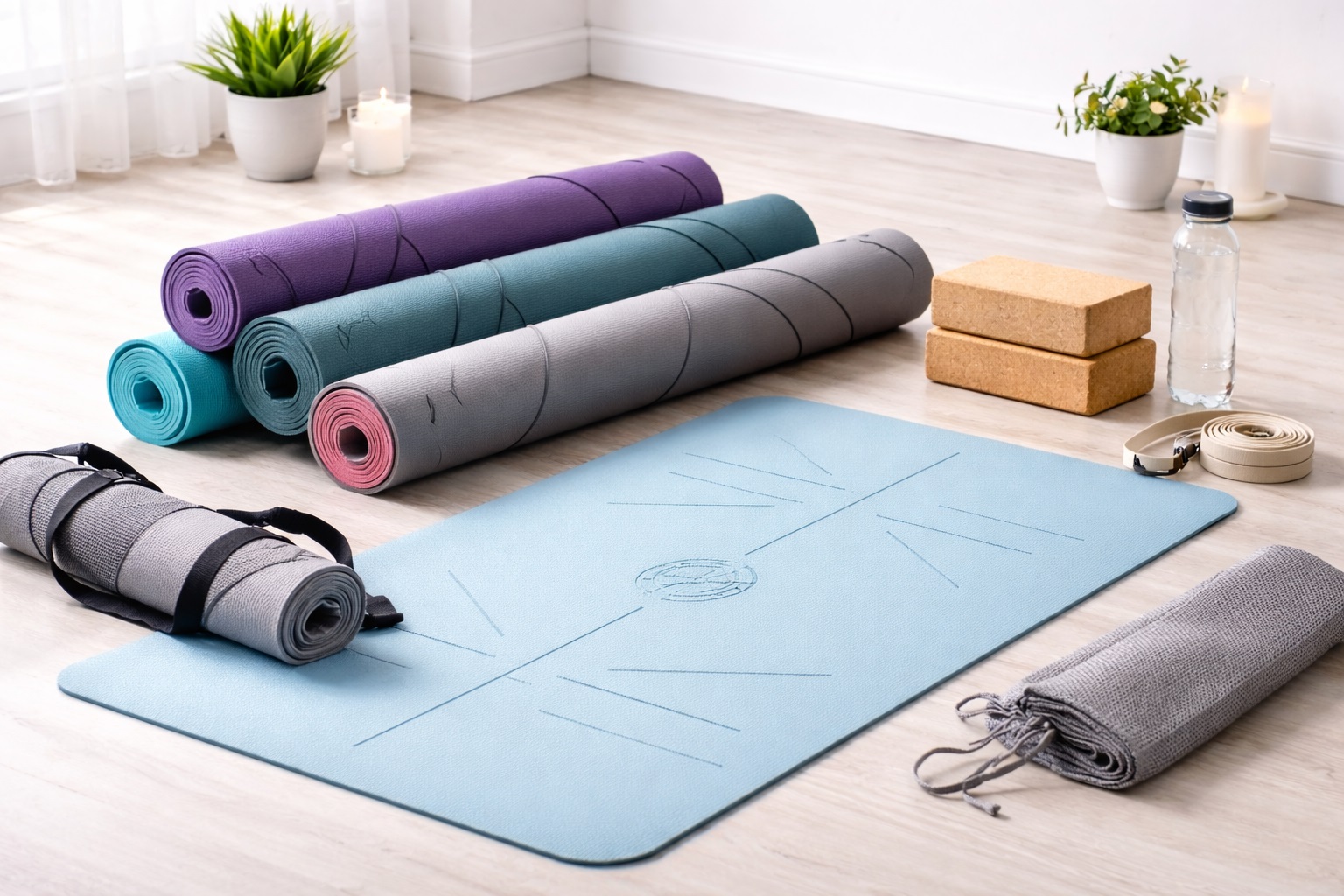
One of the hardest parts of being a beginner is knowing where to put your feet. The Retrospec mat features an "Alignment System"—lines printed on the mat that act as a guide for your hands and feet. This helps you ensure your hips are square and your stance is correct in poses like Warrior II. It’s made of eco-friendly TPE and is remarkably light.
- Pros: Built-in alignment lines, very lightweight, budget-friendly, odor-resistant.
- Cons: TPE material is not as durable as PVC or Rubber, can slide on very slick hardwood floors.
Who should buy this: Beginners practicing primarily at home who want visual cues to improve their form.
Who should avoid this: Advanced students who find the lines distracting.
7. Hugger Mugger Para Rubber Mat – Best for High Intensity
If you're a beginner who is already very active (a runner or a weightlifter), you need a mat that can handle heavy-duty movement. The Hugger Mugger is a "dense" rubber mat that doesn't stretch or bunch up during fast transitions. It has two different textures on each side, so you can choose the grip level that feels right for you today.
- Pros: Extremely stable (won't bunch), dual-sided textures, high-quality materials, great cushion.
- Cons: Heavy to carry to the studio, expensive.
Who should buy this: Athletic beginners who move dynamically and want a mat that feels "solid" underfoot.
Who should avoid this: People looking for a "light and easy" mat for gentle stretching.
8. Heathyoga Eco Friendly TPE Mat – Best Overall Budget Balance
Heathyoga has created the perfect "all-rounder" for under $50. It’s a 6mm TPE mat that includes alignment lines, a carrying strap, and a carrying bag. It’s PVC-free and odorless. It provides a very decent grip and enough cushion for most people. For a "first mat," it offers everything a beginner needs without any hidden costs.
- Pros: Complete kit (strap/bag), alignment lines, good thickness, eco-friendly TPE.
- Cons: TPE can lose its "spring" after a year of very heavy practice.
Who should buy this: Most beginners who want a complete, high-quality setup for a low price.
Who should avoid this: Professionals who want the "buy it for life" durability of a Manduka.
Buying Guide: How to Choose Your First Mat
When you are about to purchase your first yoga mat, don't just look at the colors. Consider these four critical factors for your joints and your safety:
1. Thickness: 3mm vs. 5mm vs. 6mm
- 3mm (Travel): Very light, but offers almost zero cushion. Your knees will hurt on a hard floor.
- 5mm (Standard): The "sweet spot." Good for most people and provides solid support.
- 6mm+ (Thick): Best for beginners with sensitive joints or those practicing on tile/hardwood.
2. Material: PVC vs. TPE vs. Natural Rubber
- PVC (Vinyl): The "old school" material. Durable and easy to clean, but not biodegradable and can be slippery when wet.
- TPE (Thermal Plastic Elastomer): A newer, eco-friendly synthetic. Lightweight and odorless, but can break down over time.
- Natural Rubber: The best grip and eco-friendly, but heavy and has a "smell" (latex).
3. Grip (Traction)
There are two types of grip: **Dry Grip** (standard yoga) and **Wet Grip** (hot yoga). If you tend to sweat, you need a mat with a "Matte" or "Towel-like" top. If you don't sweat much, a standard "Sticky" PVC or TPE mat is perfect.
4. Length
Standard mats are 68 inches long. If you are over 5'10" (178cm), you MUST look for an **"Extra Long" (XL)** mat (usually 71 or 72 inches). You don't want your head or feet hanging off the mat during your final relaxation (Savasana).
FAQ: Essential Yoga Mat Care
How do I clean my yoga mat?
For **Closed-Cell** mats (Manduka, most PVC): Wipe with a mixture of water and a few drops of dish soap or vinegar. For **Open-Cell** mats (Jade, Lululemon): You need to "deep clean" occasionally by submerging in water or using a specialized mat spray, then hanging to dry (never in the sun!).
Why is my new mat so slippery?
New mats (especially PVC ones like Manduka) often have a "factory film" on them. You can speed up the "break-in" by doing a "Salt Scrub": sprinkle sea salt on the mat, let it sit for 24 hours, then wipe it off with a damp cloth.
How long should a yoga mat last?
A cheap $20 mat will last about 6-12 months. A mid-range $50 mat will last 1-3 years. A premium $100+ mat (like Manduka) can literally last **10 to 20 years** if cared for correctly.
Is "Yoga Mat Smell" normal?
Yes, especially for natural rubber or TPE mats. This is the material "off-gassing." Simply unroll the mat and leave it in a well-ventilated room for 2-3 days, and the smell will significantly disappear.
Can I use my yoga mat for weightlifting or shoes?
NO! Running shoes or dropping heavy dumbbells will tear and "pit" a yoga mat almost instantly. Yoga mats are designed for bare feet and bodyweight movements only.
Final Verdict: The Winner for Your Practice
- The Best Overall: The Manduka PROlite is a professional tool that grows with you.
- The Best for Comfort: The Gaiam Thick Mat protects your knees for a low price.
- The Eco Choice: The Jade Harmony provides "natural" grip that inspires confidence.
Your yoga mat is the foundation of your entire practice. By choosing a mat that makes you feel safe, stable, and comfortable, you are removing the barriers to your own physical growth. Roll out your mat, step on, and find your calm today!